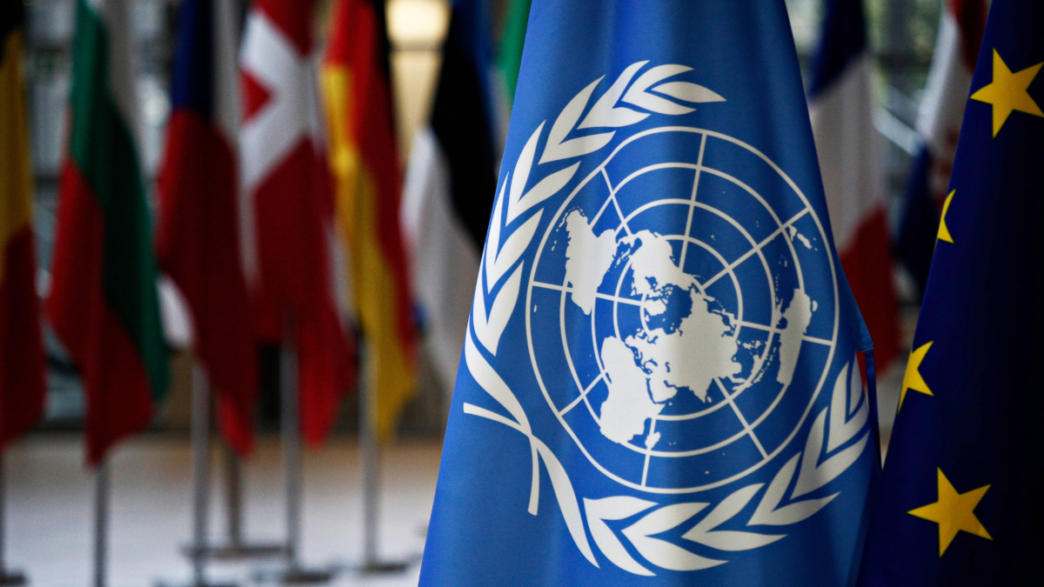
The United Nations is rebuilding how people and artificial intelligence systems access its enormous collection of global statistics. Through the new UN Data Commons, the organization wants trusted public data to work better with AI agents.
The platform was developed with Google and replaces the traditional UNData experience with a more conversational approach. Users can now search across participating UN datasets using natural language instead of navigating complicated database structures manually.
More importantly, the system has been designed so AI agents can connect directly with its underlying information. That shift reflects how quickly people are turning toward generative AI tools when researching economies, health, populations, and development.
The problem is that those systems do not always retrieve authoritative statistics reliably when users ask straightforward questions. A recent UNICEF test found major inconsistencies when leading language models answered questions about global development indicators.
Across more than 133,000 responses, the tested models produced an average accuracy score of only 21.2 percent. Around three-fifths of responses failed to return any usable numerical answer, according to UNICEF’s preliminary research.
The organization also found surprising inconsistencies when identical questions were repeated using the same models several days later. When models returned numbers both times, they provided exactly the same result only around half the time.
Those findings help explain why the United Nations believes its data infrastructure must change alongside artificial intelligence itself. Reliable information becomes increasingly important when AI assistants are becoming the first place users look for answers.
UN Data Commons Gives AI Agents Direct Access to Trusted Statistics
The UN Data Commons brings information from multiple United Nations organizations into one shared environment designed for easier discovery. Around 26 UN entities have committed to participating, with nearly 20 providing data when the platform launched.
The UN plans to move roughly 80 percent of its statistical datasets onto the platform by 2027. That would create a much broader shared data layer across agencies that historically maintained separate portals and technical systems.
The initiative is part of the UN80 programme, which includes efforts to improve efficiency and modernize shared institutional infrastructure. Official planning documents describe the project as supporting reliable AI use alongside simpler public access to UN statistics.
The project also builds upon earlier work between the UN Statistics Division and Google’s Data Commons programme. Their partnership previously produced a Data Commons platform focused specifically on Sustainable Development Goals information during 2023.
Google originally launched Data Commons to organize public datasets from different sources within one connected information framework. Rather than storing statistics as disconnected tables, the platform connects places, indicators, entities, periods, and their relationships.
That structure can make complex information easier for both people and artificial intelligence systems to understand and retrieve. The technology is also open source, allowing organizations to adapt its underlying infrastructure for their own data environments.
A major addition came when Google introduced support for the Model Context Protocol, commonly known as MCP. MCP allows AI systems to connect directly with outside data sources rather than depending entirely on training knowledge.
Google introduced its Data Commons MCP server in 2025, specifically targeting AI developers seeking reliable public information. The company said the technology could help reduce hallucinations by grounding AI responses in connected, traceable datasets.
That capability now gives the UN Data Commons a direct bridge between official statistics and emerging AI agents. An assistant could request specific indicators from the UN system without relying entirely upon information remembered during model training.
The distinction matters because model training data may be outdated, incomplete, contradictory, or detached from original statistical sources. Direct access can instead allow agents to retrieve current information while preserving connections back to the responsible UN agency.
The platform also tracks where each statistic originated, giving users another important layer of transparency around AI-generated answers. Someone receiving a figure through an assistant can trace that information back toward its underlying official source.
For journalists, policymakers, researchers, and governments, that provenance could prove especially important when statistics influence consequential decisions. AI may accelerate research, but users still need confidence that numbers originate from recognizable and accountable institutions.
Making Data AI-Ready Does Not Make AI Conclusions Reliable
The UN Data Commons could also change what users can accomplish with statistical information beyond retrieving individual numbers. Google demonstrated AI systems pulling together several indicators before producing dashboards, charts, summaries, and other analytical outputs.
In one example, an AI system examined the impact of America’s PEPFAR programme across African countries using UN statistics. It collected indicators involving HIV infections, AIDS mortality, and life expectancy before assembling them into a visual analysis.
That kind of workflow normally requires someone to locate multiple datasets, clean them, establish relationships, and build visualizations manually. Connected AI agents could dramatically reduce that work by bringing relevant information together through conversational instructions.
However, authoritative input data does not automatically mean everything an AI system concludes from those numbers becomes authoritative. Models can misunderstand relationships, ignore context, confuse correlation with causation, or present uncertain interpretations with excessive confidence.
Google itself has stressed that human review remains necessary before people cite or publish conclusions produced through these systems. That distinction will become increasingly important as agentic tools perform more complicated research and analytical work independently.
The UN’s move comes as artificial intelligence referrals are already becoming more visible across its public information services. UNICEF says generative AI assistants increasingly send users directly toward its statistical websites after answering development-related questions.
That behaviour suggests traditional search is gradually sharing its role with assistants that summarize information before users visit sources. Institutions therefore face growing pressure to make their information understandable not only to humans, but also to machines.
The change resembles the earlier shift that encouraged publishers and businesses to optimize information for traditional search engines. AI agents introduce another audience requiring structured data, clear metadata, reliable sourcing, and technical interfaces for direct retrieval.
For the United Nations, this also creates an opportunity to make decades of global statistics considerably easier to discover. Information spread across agencies can become more useful when users no longer need to understand each organization’s individual database.
Yet the project also demonstrates why better AI infrastructure involves much more than simply building stronger language models. Models need reliable systems behind them when questions depend on facts that change regularly or require authoritative confirmation.
Google.org provided $2 million in capacity-building funding alongside technical assistance supporting the platform’s initial development and infrastructure. The longer-term goal is for the United Nations to operate and scale its instance independently.
The UN has already described shared data infrastructure as an important part of making its statistical work future-ready. Its 2026 planning documents specifically identify AI readiness as central to modernizing how global information reaches different users.
The UN Data Commons therefore represents something broader than another collaboration between Google and an international organization. It acknowledges that AI assistants are quickly becoming interfaces between the public and information institutions have gathered for decades.
Giving those assistants better access will not eliminate hallucinations, poor reasoning, or misleading interpretations from artificial intelligence systems. However, it could reduce one fundamental weakness by making authoritative global statistics easier for machines to find correctly.
As AI agents become more involved in research, policymaking, journalism, and everyday questions, that distinction will matter increasingly. Better answers will depend not only on smarter models, but also on better connections to information people can trust.