Fusionality is betting that fusion companies should stop rebuilding the same control infrastructure for every experimental reactor. Instead, the Lausanne startup wants reusable systems that help operators measure, simulate, and control incredibly difficult plasma conditions.
The company has raised CHF 3 million, around $3.7 million, in a pre-seed funding round. Founderful and Playfair led the investment, which will support hiring and Fusionality’s first customer projects.
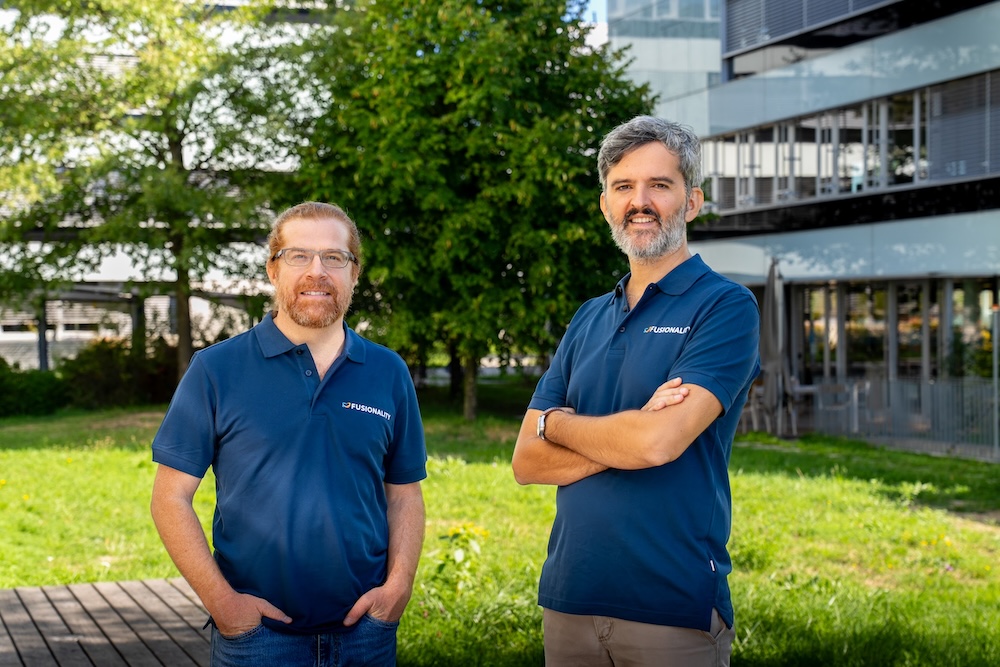
Federico Felici and Jonas Buchli founded Fusionality after spending years working on complicated real-world control problems. Both founders previously worked with Google DeepMind and bring experience combining fusion physics, engineering, simulations, and artificial intelligence.
Their startup addresses a problem receiving less attention than magnets, reactor designs, or fusion fuel development. Every fusion machine also needs sophisticated systems constantly measuring conditions and making extremely fast adjustments during operation.
Fusion requires extremely hot plasma where atomic nuclei can combine and release enormous amounts of usable energy. Keeping that plasma stable requires precise control because unwanted movement can quickly interfere with experiments or damage equipment.
Magnetic confinement reactors use powerful magnets to keep this superheated plasma separated from surrounding reactor walls. Their control systems must constantly interpret measurements and adjust equipment within tiny fractions of a second.
That creates expensive engineering work for companies already trying to solve difficult problems around commercial fusion power. Many teams therefore spend valuable time creating control, diagnostics, and data systems alongside their main reactor technology.
Fusionality believes much of that supporting technology can become reusable across different fusion machines with limited customization. Its approach could let reactor developers concentrate more engineering resources on the technologies that make their designs unique.
The company describes specialized control and data expertise as an emerging bottleneck across the expanding fusion industry. Skilled teams must understand plasma physics while also handling software, hardware, simulations, data, and real-time engineering.
Fusionality wants to package much of that knowledge into systems other companies can purchase instead of developing internally. That strategy resembles earlier technology industries where standardized suppliers eventually replaced components once built separately by every manufacturer.
The opportunity is growing because private investment has pushed more fusion startups toward larger experiments and planned power plants. Those companies increasingly need reliable operational technology as they move beyond laboratory research toward machines expected to run repeatedly.
Fusionality plans to provide integrated measurement, control, diagnostics, simulation, and data capabilities for those increasingly complicated systems. Its technology covers the path between understanding reactor conditions and responding quickly enough to maintain useful plasma behavior.
The founders have unusually relevant experience because their paths crossed while working on AI-controlled fusion experiments in Switzerland. They collaborated on research involving EPFL’s TCV tokamak, an experimental machine used to study magnetic plasma confinement.
That collaboration produced influential research showing reinforcement learning could control plasma inside a working tokamak successfully. The system learned to operate magnetic coils and maintain several plasma configurations during real experiments at EPFL.
Published in Nature during 2022, the work demonstrated how machine learning could assist extremely demanding physical control systems. Felici and Buchli later continued working around fusion control before eventually joining forces again to create Fusionality.
However, Fusionality is not presenting artificial intelligence as a replacement for every traditional reactor control method. Its broader system combines established control engineering with simulations, data technology, machine learning, diagnostics, and hardware integration.
That approach matters because fusion reactors cannot simply wait for an AI model when operating conditions suddenly change. Their systems require dependable responses while processing enormous amounts of information about plasma and surrounding equipment.
AI can still become useful for optimizing certain decisions, improving simulations, and finding better approaches during experiments. DeepMind’s earlier work showed reinforcement learning could already manage difficult plasma shapes that normally require complicated specialized controllers.
Later research also improved those AI controllers, reducing training requirements while increasing accuracy during magnetic control experiments. Those results suggest machine learning can gradually become more practical inside sophisticated fusion operations without controlling everything independently.
Fusionality is initially concentrating on magnetic confinement, currently one of the most heavily funded approaches toward fusion. Companies using tokamaks and stellarators rely on magnetic fields to manage plasma under conditions required for useful reactions.
That market includes several well-funded developers racing toward increasingly powerful experimental machines and eventual commercial electricity production. Each company may use a different reactor design, but many supporting operational requirements remain broadly similar.
This is where Fusionality believes standardization can create value without forcing companies toward identical reactor architectures. Developers could choose common building blocks before adjusting specific parts for their individual machines and operating requirements.
The model could also reduce development risk because every new fusion company would not begin with completely untested infrastructure. Reusable systems can improve over multiple deployments as engineers discover problems and apply those lessons across future customers.
That approach has already transformed industries ranging from cloud computing to semiconductor manufacturing and commercial spacecraft development. Specialized suppliers often emerge when an industry becomes large enough that every company cannot efficiently build everything internally.
Fusion could now be approaching a similar stage as startups move from scientific breakthroughs toward industrial engineering challenges. Building a working experiment remains difficult, while building reliable power infrastructure introduces an entirely different level of complexity.
Control technology becomes particularly important during that transition because commercial machines must operate much more consistently than experiments. Utilities cannot depend on reactors requiring constant manual intervention or highly customized fixes after every operating cycle.
Simulation tools could also help companies test changes before applying them directly to extremely expensive physical machines. Fusion experiments often provide limited operating time, making virtual testing valuable for reducing mistakes and improving each real experiment.
The earlier DeepMind collaboration demonstrated this advantage by training controllers inside simulated environments before testing them physically. Researchers could explore approaches digitally before using scarce operating time on EPFL’s actual TCV tokamak.
Fusionality now wants to turn similar experience into commercial infrastructure serving several developers instead of one research project. The company currently operates near EPFL’s Swiss Plasma Center, where much of its founders’ fusion expertise originally developed.
The startup remains very young, meaning its technology still needs broad validation across different commercial reactor programs. Customer names, revenue figures, and major deployment agreements have not yet been publicly disclosed by the company.
Its $3.7 million funding therefore represents an early bet on where the fusion supply chain might develop next. Investors are backing the idea that reactor developers will eventually prefer buying proven operational technology over repeatedly recreating it.
That assumption will depend partly on whether different fusion designs share enough requirements for meaningful standardization. Reactor companies may still need specialized solutions when their magnetic systems, plasma shapes, diagnostics, and operating strategies differ significantly.
Fusionality must prove its reusable approach can handle those differences without becoming another expensive custom engineering service. Success would mean creating common technology flexible enough for several machines while preserving each customer’s unique reactor design.
The company plans to begin with a carefully selected collection of technologies before expanding its product range. That gradual approach allows Fusionality to prove individual components before attempting to support an entire fusion reactor ecosystem.
The larger opportunity could grow considerably if fusion companies begin moving closer toward delivering electricity to national grids. At that point, reliable operating systems could become as important as the scientific breakthroughs enabling fusion reactions themselves.
Commercial fusion remains an unfinished challenge, and no startup has yet proven economical grid-scale fusion electricity at large scale. Yet growing investment means companies are already building the supply chains they expect future power plants will require.
Fusionality is positioning itself inside that emerging layer instead of joining the crowded race to design another reactor. Its founders believe faster fusion progress may depend partly on helping companies stop solving the same engineering problems repeatedly.
If that approach works, Fusionality could become one of the less visible companies supporting a much larger industry. Fusion’s future may depend not only on better reactors, but also on standardized tools that keep those machines running.