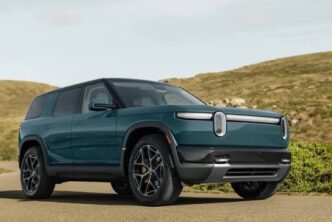
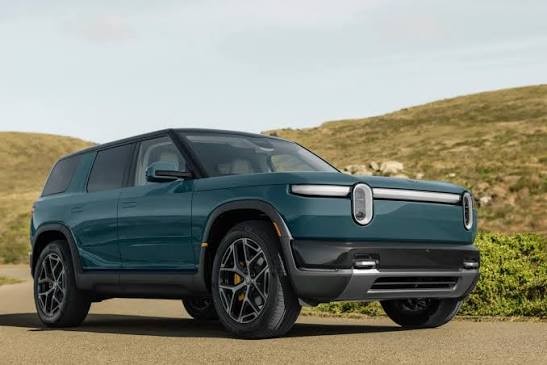
Rivian has spent several years building desirable electric vehicles without achieving the sales scale needed to transform its business. The third quarter suggests that may finally be changing. Rivian R2 helped push the company to its highest quarterly delivery total yet.
Rivian delivered 19,248 vehicles during the third quarter and produced 19,751 at its Normal, Illinois factory. Deliveries were about 45% higher than a year earlier. The company also reaffirmed its full-year target of 65,000 to 70,000 vehicles.
The record matters because Rivian has struggled to move much beyond roughly 50,000 annual deliveries in recent years. R1S, R1T, and commercial vans built the brand, but they did not create mass-market volume. Rivian R2 is supposed to change that equation.
Rivian did not disclose exactly how many R2 SUVs were included in the third-quarter total. However, the quarter was the first full reporting period after R2 deliveries began in June. That makes the new SUV the clearest explanation for the sudden step higher.
The company delivered 41,807 vehicles during the first nine months of 2026. That means it now needs a much stronger fourth quarter to reach its annual target. Rivian would need between roughly 23,200 and 28,200 additional deliveries before year-end.
Those numbers make the next three months important. Rivian R2 has already helped create a new quarterly record. Now it must prove the company can keep scaling without losing momentum.
Rivian R2 Is Breaking a Pattern the Company Needed to Escape
Rivian’s premium vehicles helped establish the company as one of the most recognizable electric vehicle startups in the United States. The R1T pickup and R1S SUV gave Rivian a strong brand identity. Their higher prices, however, naturally limited the size of the available market.
Rivian R2 was designed to broaden that customer base. Production officially began in April at Rivian’s Illinois factory after years of development and manufacturing preparation. Customer-ready vehicles began moving through final validation before deliveries started later in the spring.
The model currently opens a lower price point than Rivian’s original consumer lineup. Rivian also plans additional versions that should eventually reach lower prices. That makes R2 central to the company’s attempt to compete for a much larger group of EV buyers.
The impact is already visible in the quarterly numbers. Rivian delivered 12,194 vehicles during the second quarter, according to industry reporting. Third-quarter deliveries then climbed to 19,248, an increase of nearly 58% in only three months.
Production moved sharply higher as well. Rivian built 19,751 vehicles during the quarter, compared with 12,613 in the previous period. That suggests the company is increasing factory output alongside customer deliveries.
Rivian R2 therefore appears to be doing exactly what the company needed from its next platform. It is increasing volume without forcing Rivian to depend entirely on its most expensive vehicles. That is a crucial step for any automaker trying to spread manufacturing costs across more units.
Rivian has spent heavily preparing for this transition. The Normal factory received a major expansion to support R2 body and assembly operations. Rivian previously said the site could eventually support around 215,000 vehicles annually across several product lines.
Higher volume matters because vehicle manufacturing rewards scale. Factory equipment, engineering programs, service networks, and supply chains are expensive regardless of how many vehicles are sold. Increasing output allows those fixed costs to be distributed across more customers.
That is one reason Rivian R2 carries so much financial importance. Rivian has spent years reporting heavy losses while funding manufacturing infrastructure and future products. The new SUV must improve both revenue growth and production efficiency.
Rivian is aiming for between 20,000 and 25,000 R2 deliveries by the end of 2026. Achieving that target would make the launch unusually fast for a new electric vehicle in the United States. It would also put R2 at the center of Rivian’s strongest sales year.
The company’s annual guidance supports that ambition. Rivian maintained its forecast for 65,000 to 70,000 total vehicle deliveries after announcing the third-quarter record. That confidence suggests management believes production can rise substantially again before December ends.
Still, that target requires another major jump. Even the low end would require fourth-quarter deliveries above the company’s new record. Reaching the high end would demand output almost 47% above the third-quarter result.
That creates an important test for the R2 manufacturing ramp. One record quarter is encouraging, but mass-market success requires repeatability. Rivian must prove it can keep building and delivering vehicles at increasingly higher volumes.
Rivian R2 Is Now Carrying Much More Than Sales Growth
The importance of Rivian R2 extends beyond the company’s 2026 delivery numbers. Rivian is building its future manufacturing strategy around the platform. Its second U.S. factory in Georgia is expected to become a major production hub for R2 and R3 vehicles.
Rivian’s current long-term plan envisions two production blocks at the Georgia site. Each would support around 200,000 vehicles annually, creating total capacity of approximately 400,000 units when fully developed. Production from the first phase is expected to begin in 2028.
That future capacity shows how much growth Rivian expects from its midsize platform. The company is not expanding manufacturing for another niche vehicle. It is preparing for volumes far beyond anything Rivian has achieved so far.
Rivian has also opened an East Coast headquarters in Atlanta while construction continues outside Social Circle. The company says that office will support its expanding operations in Georgia. The broader investment links the company’s next stage directly to R2 production.
Rivian R2 is also becoming part of the company’s autonomy strategy. Rivian has agreed to work with Uber on autonomous vehicles based on the R2 platform. That creates another potential source of future demand beyond individual retail buyers.
The company’s decision to invest more aggressively in autonomy has also affected its financial priorities. Rivian has pushed profitability targets further out while funding technology it believes could create a much larger opportunity. That makes current vehicle growth even more important.
Strong R2 sales give Rivian more room to finance those ambitions. Weak demand would create the opposite problem. The company would still be carrying the costs of factories, engineering, software, and autonomy without enough volume to support them.
So far, the third quarter gives Rivian reason for optimism. Record deliveries suggest customer demand is meeting higher factory output. The company also raised its full-year forecast earlier this year after seeing strong initial R2 demand.
The more difficult question is whether that demand continues as Rivian expands beyond early adopters. Initial buyers often include customers who followed a vehicle for years before launch. Sustainable growth requires attracting people who were never committed Rivian fans.
Pricing will play a major role in that effort. The current R2 remains relatively expensive compared with many mainstream vehicles. Lower-priced configurations could therefore become even more important than the launch versions.
Competition is another challenge. The electric SUV market already includes established models from Tesla and traditional automakers. Rivian must persuade buyers that its design, software, performance, charging experience, and brand justify choosing R2.
Manufacturing quality also becomes more important as volumes rise. Rivian recently issued a small recall involving improperly tightened battery fasteners on a limited number of R2 vehicles. The issue affected only a handful of SUVs, but it showed how production discipline matters during a fast ramp.
That does not undermine the sales record by itself. New vehicles often experience early manufacturing issues, and the affected population was tiny. However, Rivian cannot afford small problems to scale alongside production.
The company’s October 29 financial results should provide a clearer picture of what the third-quarter record means economically. Delivery growth is important, but investors will also be watching automotive margins, cash use, and R2 production costs.
Those numbers will show whether greater volume is translating into a healthier business. Rivian ultimately needs more than higher sales. It needs R2 to make each vehicle increasingly economical to build.
Still, the third quarter marks an important change in the company’s trajectory. Rivian has spent several years waiting for a product capable of expanding its market substantially. R2 is beginning to provide evidence that such a product may finally be on the road.
The challenge now is sustaining that momentum. Rivian R2 has helped the company set a sales record, but the bigger milestone would be breaking permanently beyond its old annual delivery ceiling.
If Rivian can do that, 2026 may be remembered as the year the company moved from premium EV startup toward a much larger automaker.