
Small businesses face many of the same health-benefit decisions as larger companies, but they rarely command the same brokerage attention. Corridor funding has now reached $25 million as the startup bets artificial intelligence can help change those economics.
The seed round was led by Bain Capital Ventures, with BoxGroup and executives from OpenAI, Scale AI, and Ramp participating. Corridor plans to use the capital to expand an AI-powered health benefits brokerage built specifically around smaller employers.
Traditional benefits brokers earn commissions based partly on the size of the accounts they manage. Smaller companies can therefore require substantial administrative work while producing less revenue than much larger corporate clients.
Corridor believes AI can reduce that imbalance without removing people from important healthcare decisions. Human advisers remain involved with customers, while AI agents handle repetitive administrative work happening behind the scenes.
Those agents can check whether doctors remain within insurance networks and help coordinate appointments for employees. They can also communicate updated insurance information to healthcare providers when administrative problems arise.
The model gives Corridor a different proposition from software platforms that simply help employers purchase insurance. The startup wants to become an ongoing healthcare concierge for both company leaders and the employees covered by their plans.
Its website currently targets businesses with between one and 500 employees and offers support throughout enrollment and plan management. Corridor also says customers can compare several plan structures rather than being pushed toward one insurance product.
That combination of brokerage expertise and automated administrative work sits at the center of Corridor’s strategy. If it works, smaller employers could receive more support without requiring brokers to increase staffing at the same pace.
Corridor Funding Backs an AI-Native Brokerage Model
Corridor emerged from a much more personal problem than the usual search for an attractive software market. Co-founder Jackson Wagner began exploring healthcare after a running accident left him dealing with long-term complications and chronic pain.
Wagner had previously worked as a product lead at Scale AI before leaving the company in 2022. He later studied computer science and electrical engineering at UC Berkeley before returning to startup building.
He eventually joined former Scale AI colleague Eric Qian to develop Capernaum AI, which focused on clinical agents for musculoskeletal care. Their initial idea centered on helping patients navigate treatment rather than rebuilding the health insurance brokerage itself.
The direction changed after the pair approached Cold Start about potentially financing Capernaum. Nikhil Aggarwal and Jason Dong saw a broader opportunity around how Americans gain access to healthcare through employer-sponsored insurance.
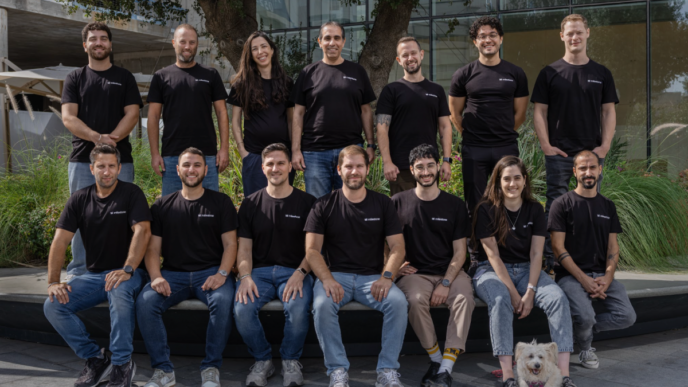
The four founders eventually came together to launch Corridor around that larger problem. Their thesis was that improving how people choose and use health coverage could influence healthcare access earlier in the journey.
That shift also created a business where artificial intelligence could address a significant amount of administrative work. Health benefits involve repeated questions about coverage, providers, enrollment, scheduling, claims, and different insurance structures.
Many of those activities consume time without necessarily requiring an experienced adviser to complete every individual step. Corridor uses agents for repetitive work while keeping human advisers available for decisions requiring judgment and personal support.
The Corridor funding round gives the company more resources to build that combination as employers approach another important enrollment period. Aggarwal said roughly 80% of small businesses choose their health plans during the fourth quarter.
That timing means Corridor is raising capital just before the period when many potential customers reconsider existing coverage. It also gives the startup an opportunity to test whether its model can handle growing account volumes during a concentrated season.
Corridor already positions itself as a brokerage rather than simply an AI product for benefits administration. The company says it evaluates fully insured plans, ICHRAs, level-funded coverage, PEO arrangements, and ancillary benefits for customers.
That distinction matters because employers often face several possible ways to structure health benefits. Technology may accelerate the process, but companies still need guidance around costs, networks, employee needs, and administrative complexity.
Small Businesses Become the Bigger Opportunity
Corridor enters a market where small employers can struggle to receive the same service larger companies expect. Lower commissions can make smaller accounts less attractive even when their employees have equally complicated healthcare questions.
The startup believes automation can change the relationship between account size and service quality. AI agents can absorb administrative volume while advisers focus their attention on more complicated customer and employee situations.
Corridor claims businesses using its service save an average of 20% on health insurance premiums. That figure comes from the company and should be viewed as its own reported customer outcome rather than an independent industry benchmark.
The company also says around 20 million Americans receive health benefits through small employers. That potential customer base gives Corridor room to grow without immediately competing for the largest enterprise benefits accounts.
Competition already exists, including technology-focused benefits companies such as Nava Benefits and Ignition Benefits. Corridor will therefore need to show that its AI-heavy operating model creates better economics without reducing service quality.
The Corridor funding also arrives as investors increasingly target healthcare businesses using AI to remove administrative friction. Bain Capital Ventures says it is particularly interested in technologies addressing healthcare costs, access, accountability, and inefficient administrative processes.
For Corridor, those inefficiencies provide both the problem and the opportunity. Every task handled effectively by software could potentially allow advisers to support more employees without creating an equally large increase in operating costs.
However, healthcare benefits also involve sensitive decisions where accuracy and trust matter considerably. Corridor must demonstrate that automation can improve service while maintaining reliable human support when employees face difficult healthcare situations.
The founders are setting an ambitious target beyond becoming another modern insurance broker. Aggarwal has said the company wants to build what it considers America’s most trusted healthcare institution.
Reaching that goal would require much more than raising a large seed round. Corridor still needs to prove that its service can scale across thousands of employers while retaining the responsiveness that makes its approach appealing.
The Corridor funding gives the startup substantial capital to begin testing that proposition. Its bigger opportunity lies in proving that AI can make high-quality benefits advice economically viable for businesses traditional brokerage economics often leave underserved.