
Subscription burnout has quietly become one of the biggest threats facing modern apps. Users are not rejecting apps outright. Instead, they are exhausted by recurring charges that stack up faster than value becomes clear. As more products compete for a slice of monthly budgets, attention has shifted from acquisition to retention, and the subscription model is under real pressure. Apps are fighting subscription burnout by rethinking pricing, redesigning value delivery, and rebuilding trust that has eroded over years of aggressive monetization.
Subscription fatigue did not happen overnight. It grew as apps copied the same playbook. Free trial. Credit card upfront. Auto-renew by default. Minimal reminders. At first, this felt convenient. Over time, it felt manipulative. Users now manage dozens of subscriptions across entertainment, productivity, wellness, and finance. Each one might be small. Together, they feel overwhelming. As a result, churn is rising even for apps users still like.
This shift is changing behavior in subtle ways. Users hesitate before signing up. They delay trials. They cancel faster. They demand immediate proof of value. The old assumption that habit will form before billing starts no longer holds. Apps now have to earn commitment earlier, or they lose the user entirely.
The first major response has been a renewed focus on value clarity. Apps are simplifying what users actually pay for. Instead of bundling dozens of features under one vague promise, teams are highlighting one or two outcomes that matter. This clarity reduces anxiety at checkout. When users understand exactly why they are paying, they are less likely to regret it later.
Another strategy gaining traction is flexible pricing. Monthly subscriptions are no longer the default answer. Many apps now offer weekly plans, annual discounts, usage-based pricing, or lifetime access tiers. Flexibility gives users a sense of control. It also aligns cost with perceived value. When payment matches usage, resentment drops.
Freemium models are also evolving. In the past, freemium often meant aggressive paywalls that blocked core functionality. Today, smarter apps allow meaningful free use while charging for acceleration, depth, or convenience. This approach builds trust first. Users who rely on the product organically convert later with less friction and lower churn.
Some apps are even stepping away from subscriptions entirely. One-time purchases are making a comeback, especially in utility and creative tools. Users increasingly prefer paying once for something that feels complete. While this limits predictable recurring revenue, it can increase total lifetime value by attracting users who would never subscribe.
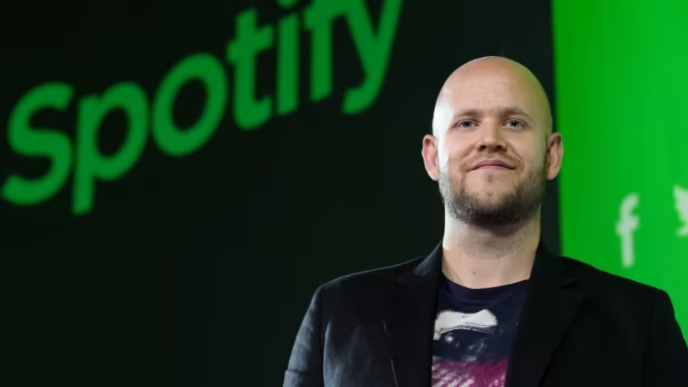
Ad-supported tiers are another response. Instead of forcing users into a pay-or-leave decision, apps are offering a third path. Users can pay with attention rather than money. This model, long associated with media, is spreading into productivity and learning apps. When ads are well integrated and respectful, many users prefer this option to another monthly charge. Platforms like Spotify have shown that tiered monetization can coexist when value is clear.
Transparency has become a competitive advantage. Apps now highlight cancellation policies, send proactive reminders before renewals, and make account management easier. These choices might seem risky, but they reduce long-term churn. Users are more likely to return to products that treated them fairly, even after canceling.
Timing also matters more than ever. Apps are delaying paywalls until users experience a clear “aha” moment. Instead of charging on day one or seven, they wait until value is demonstrated. This requires better onboarding and stronger product design, but it aligns monetization with satisfaction.
The rise of subscription management tools has amplified this trend. Users now track, compare, and cancel subscriptions with ease. This visibility changes power dynamics. Apps can no longer rely on forgetfulness. They must justify their place every month. In response, teams are investing more in ongoing engagement rather than front-loaded growth tactics.
Another important shift is emotional positioning. Apps are changing how they talk about pricing. The language is softer, more respectful, and more user-centric. Instead of urgency and pressure, messaging focuses on choice and flexibility. This tone matters. Users burned by dark patterns are sensitive to manipulation.
Retention strategies are evolving too. Rather than locking users in, apps are trying to pull them back through consistent value. Regular improvements, visible updates, and responsive support all reinforce the sense that the subscription is alive and improving. Stagnant products lose justification quickly.
Enterprise and B2B apps face similar pressures. Even companies are questioning recurring software costs. As finance teams scrutinize budgets, vendors must prove ROI faster. This has led to modular pricing and clearer usage metrics. When buyers can see impact, renewal conversations become easier.
Subscription burnout is also influencing product scope. Apps are resisting feature bloat. More features do not equal more value when users feel overwhelmed. Focused products with clear use cases retain better. Simplicity has become a monetization strategy.
Interestingly, trust now drives growth more than discounts. Heavy promotions can attract users, but they also attract churn. Sustainable growth comes from predictable satisfaction. Apps that respect users’ time and money earn loyalty that marketing alone cannot buy.
This environment favors long-term thinking. Short-term revenue optimization through aggressive billing often backfires. The apps that win are those that align business incentives with user success. When users stay because they want to, not because they forgot to cancel, revenue becomes more stable.
Subscription burnout is not the end of subscriptions. It is a correction. The model still works when value is obvious, pricing is fair, and control remains with the user. Apps are learning this lesson in real time, often through painful churn data.
The next phase of app monetization will likely be hybrid by default. Subscriptions will coexist with one-time purchases, ads, and usage-based fees. This mix reflects diverse user preferences rather than forcing a single model on everyone.
For users, this shift is empowering. For builders, it is humbling. Monetization can no longer be an afterthought or a growth hack. It must be part of the product experience itself.
Apps are fighting subscription burnout by becoming more honest, more flexible, and more intentional. Those that succeed will not just reduce churn. They will rebuild trust in a model that users still want to believe in, as long as it works for them.