Autonomous freight is beginning to move beyond self-driving trucks and into one of America’s oldest transport networks. Parallel Systems, a rail technology startup founded by former SpaceX engineers, has raised $100 million to expand a battery-electric freight system designed to move goods without a driver onboard. The company believes smaller autonomous rail vehicles could make short-distance freight routes economically attractive again.
The funding will support production and commercial deployment of Parallel’s latest Panther rail vehicles. These machines are designed to carry standard freight containers for as much as 500 miles on one charge. Unlike conventional freight trains, they can operate individually or assemble themselves into smaller platoons depending on how much cargo needs to move.
That flexibility sits at the center of Parallel’s autonomous freight strategy. Traditional railroads are extremely efficient when moving large quantities of goods over long distances. However, many shorter routes have gradually shifted toward trucks because conventional trains often need significant volume before the economics make sense.
Parallel believes automation can change that calculation. Instead of waiting until enough freight exists to justify a long train, railroads could dispatch smaller groups of battery-powered vehicles more frequently. That could give rail some of the flexibility normally associated with trucking while keeping the energy advantages of steel wheels running on rails.
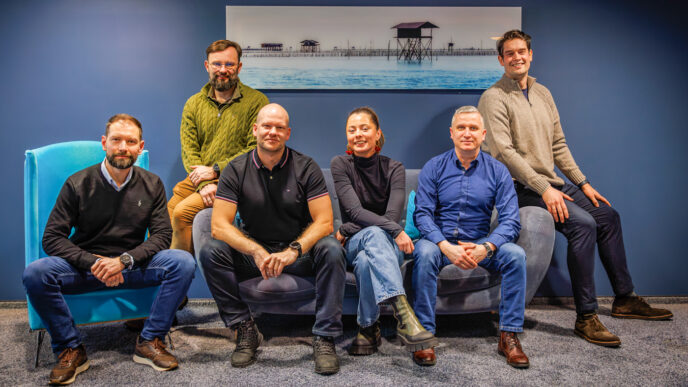
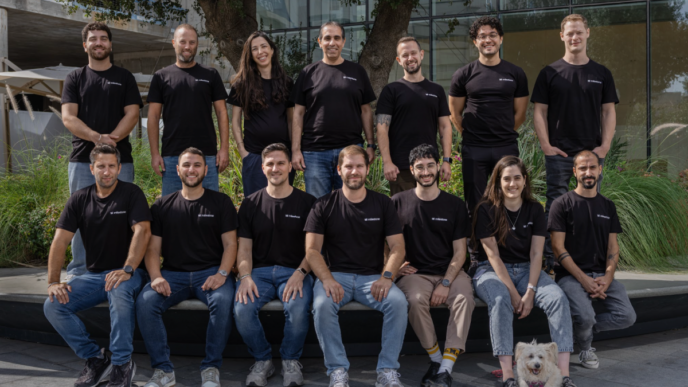
The SpaceX connection also helps explain why Parallel has approached the problem differently. Co-founder and CEO Matt Soule and other members of the founding team spent years developing avionics and other systems for rockets before launching Parallel in 2020. Their new challenge is not spaceflight, but applying advanced controls, sensors, software, and automation to an industry that still depends heavily on traditional operating models.
The company describes its mission as moving more freight from roads onto existing railway infrastructure. Parallel says its system is meant to work alongside conventional freight operations rather than replace them entirely. The larger opportunity is opening routes where trucks currently dominate because trains have become too expensive or inflexible.
SpaceX Alumni Are Rethinking Autonomous Freight on Rail
Freight rail has always had an efficiency advantage when large amounts of cargo need to travel long distances. The problem appears when the distance becomes shorter and shipment sizes become smaller. Railroads still carry substantial fixed costs around crews, yards, terminals, and train assembly even when fewer containers need to move.
That helps explain why trucking dominates so many shorter freight journeys. A truck can pick up one trailer and leave without waiting for several hundred additional containers. The vehicle can also travel directly between facilities instead of relying on rail terminals located far from the shipper or customer.
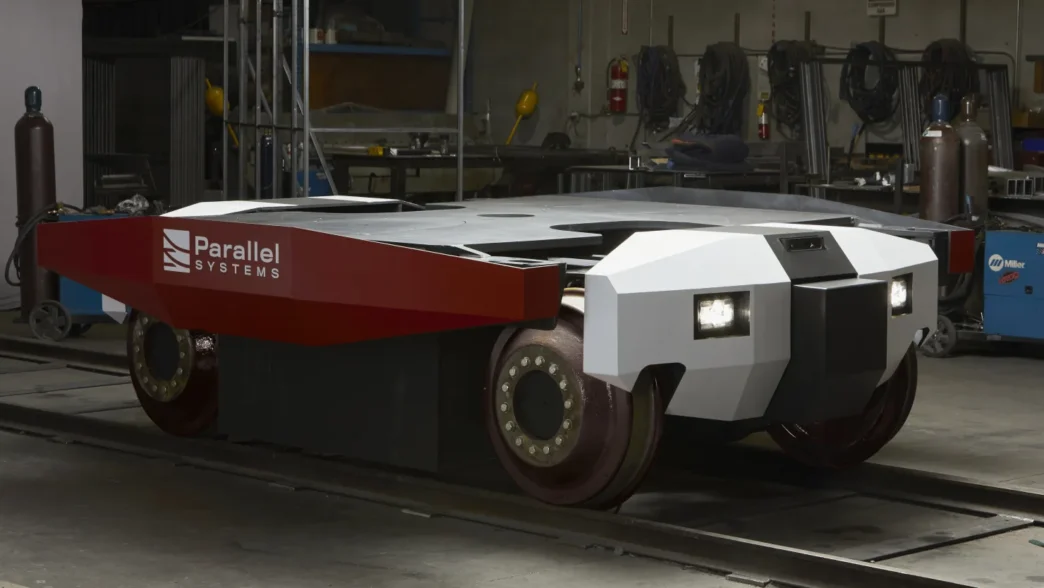
Parallel’s autonomous freight model tries to bring some of that flexibility onto rail. Its vehicles are individually powered and can carry standard intermodal containers. Because each unit has its own propulsion system, the company does not need a traditional locomotive pulling dozens or hundreds of passive railcars.
The vehicles can travel alone when the shipment is small. When more cargo needs to move along the same route, they can automatically assemble into platoons. Parallel says these formations improve aerodynamic efficiency while still allowing individual vehicles to separate when they need to travel toward different destinations.
This design also removes the traditional coupler between vehicles. Conventional railcars normally need mechanical coupling and uncoupling when trains are assembled or divided. Parallel instead uses automated bumper-to-bumper platooning, allowing the vehicles to group together and separate without the same manual process.
That could become particularly useful inside rail yards. When a conventional train arrives, switching individual cars can require time, equipment, and workers. An autonomous freight system capable of sorting itself could reduce some of those movements and help containers reach different destinations more quickly.
Parallel also argues that shorter platoons could reduce disruption at road crossings. Long freight trains can block crossings for extended periods, especially when they slow down or stop. Parallel vehicles are designed to separate when necessary so crossings can remain open while other rail traffic moves through the network.
The technology represents a major departure from the direction much of the freight rail industry has taken. Railroads have spent years concentrating freight into increasingly long trains because longer formations spread labor and locomotive costs across more cargo. That model improves efficiency on major corridors but can make lower-volume routes less attractive.
Autonomous freight offers another possible answer. Instead of making every train bigger, Parallel wants to reduce the minimum amount of freight required before running rail service makes economic sense. Smaller shipments could leave more frequently rather than waiting for enough cargo to fill a traditional train.
That is particularly important because many freight movements happen across relatively short distances. Parallel has historically focused on routes below roughly 500 miles, where trucks often have an operational advantage. The company says its battery-electric vehicles are designed specifically to make those movements more competitive for railroads.
The Department of Energy previously highlighted the same opportunity when backing Parallel through its ARPA-E program. At the time, the company said less than 2% of short-haul intermodal freight under 500 miles moved by rail. Parallel’s system was designed to make those routes economically viable using autonomous electric rail vehicles.
That opportunity gives autonomous freight a potentially enormous addressable market. Trucks move huge quantities of goods between ports, warehouses, factories, and distribution centers every day. Railroads already have thousands of miles of infrastructure connecting many of those locations, but some lines are underused.
Parallel does not need to build an entirely new transportation network. Its larger bet is that automation can make existing rail infrastructure useful for more types of shipments. That creates a very different challenge from autonomous trucking, which has to operate directly alongside ordinary drivers across public highways.
Rail provides a much more structured environment. Vehicles follow fixed tracks, and their possible movement is constrained compared with cars or trucks. However, the safety requirements remain demanding because freight vehicles are heavy, braking distances matter, and rail networks already contain trains, workers, crossings, and other infrastructure.
Parallel equips its vehicles with cameras and other sensors that continuously monitor the track and vehicle systems. The company says the vehicles transmit health and position information while software integrates with existing railroad business and control systems. Predictive monitoring is also designed to identify maintenance needs before they cause operational downtime.
The company has also focused heavily on braking. Parallel says its vehicles use high-bandwidth hydraulic braking and can stop considerably faster than conventional freight trains. Those shorter stopping distances could become especially important when autonomous vehicles operate on routes that also cross roads or pass through industrial areas.
For Soule and the former SpaceX engineers around him, this combination of hardware and software is familiar territory. SpaceX had to combine sensors, controls, propulsion, software, and safety systems into tightly integrated machines. Parallel is applying a similar systems-engineering mindset to freight rail rather than rockets.
The challenge is still substantial. Rail is highly regulated, infrastructure varies between operators, and autonomous freight cannot simply appear on any track without extensive safety validation. Parallel needs approval from host railroads and regulators before expanding commercial operations.
That process is already underway. The company has been testing its technology on real rail infrastructure rather than relying only on private demonstrations. Those tests are intended to verify braking, sensing, operational procedures, and other safety systems under conditions that resemble commercial freight service.
Autonomous Freight Could Give Railroads a Second Shot at Short Hauls
The economic case for autonomous freight becomes clearer around ports. Major ports move enormous volumes of containers every day, but much of the cargo still leaves the terminal by truck. That can create queues, traffic congestion, emissions, and unpredictable delivery times for drayage companies.
Parallel believes rail could move some of those containers closer to warehouses and customers before trucks handle the final distance. Instead of sending hundreds of trucks directly into heavily congested port areas, autonomous freight vehicles could move groups of containers to smaller inland terminals.
Trucking would still remain an important part of the journey. A local truck could collect the container near its final destination and complete the last few miles. The difference is that the truck would spend less time trapped in port traffic and more time actually making deliveries.
That could make autonomous freight interesting even to trucking companies that might initially view it as competition. Drayage operators are generally paid for completed moves, not for the time vehicles spend waiting in congestion. Faster transfers could allow the same truck and driver to complete more trips during a working day.
Parallel has already been testing near the Port of Savannah, one of the busiest container gateways in the United States. The company has used that environment to evaluate safety systems and operating procedures while working toward commercial payload operations.
The port use case also demonstrates why batteries make sense for this particular type of rail vehicle. Parallel’s Panther system is not designed to replace every long-haul freight locomotive. It is optimized around shorter journeys where predictable charging locations and repeated routes make electric operation more practical.
Parallel says its vehicles can travel up to 500 miles on a charge and regain that range with around one hour of charging under appropriate conditions. Automatic charging is also part of the design, reducing the need for workers to manually connect the vehicles each time they return to a terminal.
Energy efficiency is another part of the company’s argument. Rail already benefits from relatively low rolling resistance compared with rubber tires on roads. Parallel has previously said its electric vehicles use significantly less energy than comparable semi-truck freight while producing no tailpipe emissions during operation.
That advantage matters as freight operators face pressure to lower fuel costs and emissions. Diesel remains one of the largest operating expenses for many trucking companies. Battery-electric rail could potentially shift some freight away from diesel without requiring every trucking route to become fully electric.
Autonomous freight could also give railroads a new reason to invest in routes they have gradually abandoned. Traditional economics often push operators toward high-volume corridors connecting large terminals. Smaller industrial sites may receive infrequent service or lose rail access entirely when volumes fall.
Parallel argues that smaller automated vehicles can lower the threshold required to serve those customers. A railroad would not need to wait until enough cargo exists for a long train. Several containers could move when customers need them, potentially making lower-density corridors useful again.
This is where the startup’s technology begins to challenge the traditional definition of a train. A Panther vehicle looks closer to an autonomous freight platform running on rails than a miniature locomotive pulling standard cars.
That difference could eventually change terminal design as well. Parallel says its system could allow smaller terminals to operate closer to shippers and receivers. Existing rail-served industrial sites might also begin handling containers without requiring the scale associated with major intermodal terminals.
Smaller terminals could reduce another disadvantage rail faces against trucking. If a container has to travel a long distance by truck just to reach a massive rail hub, the time and cost savings of rail quickly disappear. Bringing terminals closer to manufacturers and customers could make short-haul rail more practical.
The model also depends on Parallel integrating with existing railroads rather than attempting to replace them. The company has repeatedly described its system as complementary to conventional freight service. Established operators would still control the networks while Parallel provides technology that allows them to serve additional markets.
That approach could make adoption easier than building an entirely new rail company. Existing railroads already own or operate the track, maintain relationships with customers, understand regulatory requirements, and manage network traffic. Parallel can concentrate on the autonomous freight technology itself.
The SpaceX alumni behind the startup are also taking their ambitions outside the United States. Parallel announced an agreement with global logistics company Agility in September 2026 to explore deployments across the Gulf region, Middle East, and Europe. That signals the company believes its approach can work beyond the specific economics of American railroads.
Still, proving technical capability is only one part of the challenge. Parallel has to demonstrate that customers will trust valuable cargo to an autonomous system, that railroads can integrate it into complex networks, and that regulators are comfortable with commercial operations at scale.
Manufacturing will become another test. Building experimental vehicles is very different from producing enough Panther units to serve multiple commercial routes. The $100 million funding round gives Parallel significantly more capital to address that transition.
Hardware companies often face their hardest problems when they move from successful prototypes into production. Components need reliable suppliers, manufacturing processes must become repeatable, and maintenance systems have to work once vehicles leave the engineering team.
Parallel’s SpaceX roots may prove useful here as well. Rocket development requires not only advanced engineering but also manufacturing discipline and extensive testing. Whether that experience translates successfully into rail equipment will become clearer as the Panther moves toward broader deployment.
The company is entering the market at an interesting moment. Freight operators are searching for ways to reduce costs, trucking companies face volatile fuel and labor expenses, and railroads are under pressure to find new growth without sacrificing efficiency.
Autonomous freight does not need to eliminate trucking to become significant. Moving even a small percentage of short-haul container traffic onto rail could create a substantial market. Trucks would continue handling routes where door-to-door flexibility matters most, while automated rail could take over repetitive corridor movements.
That division may ultimately be more realistic than framing rail and trucking as direct rivals. Parallel’s technology works best when each mode handles the part of freight movement it does efficiently.
Rail can move heavy loads using relatively little energy. Trucks can reach almost any warehouse, factory, or store. Autonomous freight could create a bridge between those strengths by allowing rail to behave more flexibly before trucks handle the final journey.
Parallel still has years of execution ahead before that vision becomes commonplace. Safety approvals, manufacturing scale, railroad partnerships, infrastructure integration, and customer adoption could all determine how quickly the technology spreads.
However, the $100 million round gives the former SpaceX engineers a much larger opportunity to prove their argument. They are not simply automating the freight train people already recognize. They are asking whether rail needs to operate like a traditional train at all.
If that idea works, autonomous freight could reopen routes that railroads once considered too small to serve profitably. It could also reduce truck congestion around ports and create another low-emission option for moving containers across regional distances.
SpaceX taught Parallel’s founders how advanced hardware, software, and autonomy can reshape an established engineering problem. Their new target is far older than commercial spaceflight, but the ambition is similar.
Parallel wants to make freight rail behave less like a century-old network built around enormous trains and more like an on-demand transportation system. Autonomous freight is the technology it believes can make that transition possible.