SoftBank has completed the final stage of a massive OpenAI commitment that now defines much of its artificial intelligence strategy. The Japanese group invested another $10 billion through Vision Fund 2 on October 1. That final payment completes a $30 billion follow-on commitment announced earlier this year.
The latest SoftBank OpenAI investment also takes the group’s cumulative OpenAI exposure to $64.6 billion. SoftBank says that investment gives it an ownership interest of approximately 13%. Few technology investors have placed such a concentrated financial bet on one private AI company.
That makes this more than another large funding round. SoftBank is effectively tying a significant portion of its future growth strategy to OpenAI’s success. It is also using increasingly sophisticated financing to keep that strategy moving.
The final $10 billion tranche was funded using proceeds from foreign-currency senior notes issued in September. SoftBank also canceled the remaining $10 billion of unused capacity from an earlier bridge facility. It says all borrowings under that bridge arrangement have now been repaid.
Those details show how aggressively SoftBank has been restructuring its balance sheet around artificial intelligence. The company is not merely investing surplus cash in OpenAI. It is raising capital specifically to deepen its position in the AI ecosystem.
SoftBank OpenAI Investment Is Now Central to Masayoshi Son’s AI Strategy
SoftBank’s relationship with OpenAI has grown rapidly over the last two years. By March 2026, the group had already invested $34.6 billion through Vision Fund 2. It then committed another $30 billion, split into three $10 billion payments.
The first payment arrived in April, followed by another in July. The final payment was scheduled for October and completed as planned. That structure allowed SoftBank to spread an extraordinary investment across several financing periods.
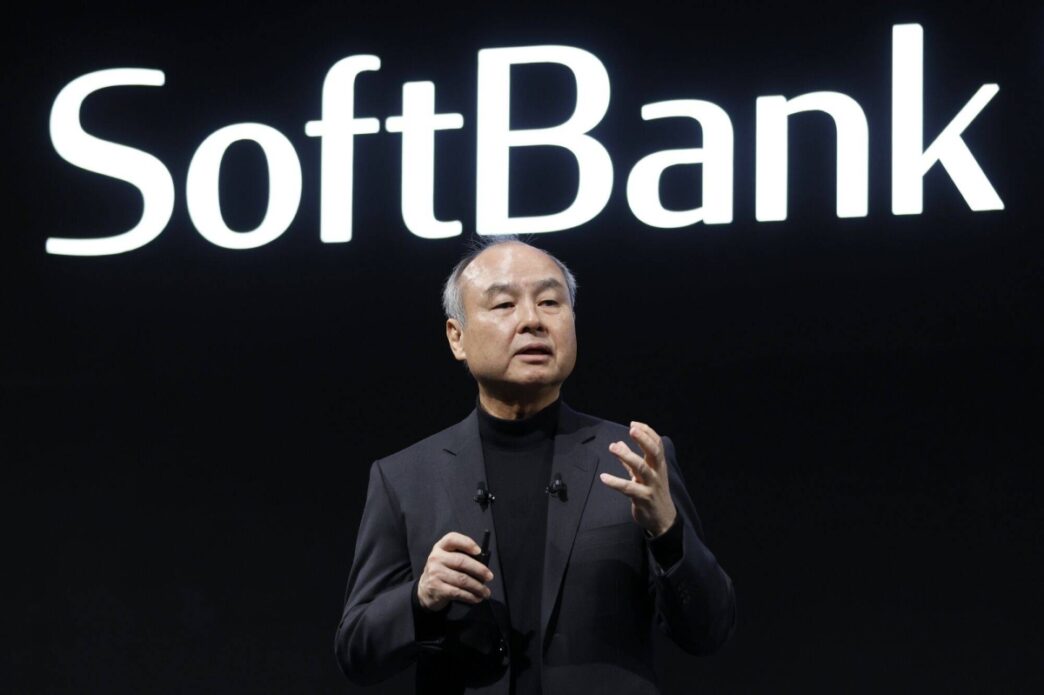
The SoftBank OpenAI investment reflects Masayoshi Son’s broader belief that artificial intelligence will reshape the global economy. SoftBank has repeatedly positioned AI as the company’s most important long-term investment theme. OpenAI now sits at the center of that strategy.
SoftBank has said OpenAI combines advanced technology with a rapidly expanding user base. The group highlighted ChatGPT’s growth and OpenAI’s broader enterprise reach in its recent management materials. It also described OpenAI as a central player in the future AI industry.
That confidence helps explain why SoftBank is willing to accept significant concentration risk. The group is not spreading this capital evenly across dozens of frontier AI developers. Instead, it has built one enormous position around OpenAI.
SoftBank’s own risk materials acknowledge the uncertainty involved. The company identifies rapid technological change, competitive shifts, regulation, and financing pressure among the risks surrounding AI investment. It also conducts stress testing around leverage and market conditions.
The SoftBank OpenAI investment therefore combines enormous upside with equally unusual exposure. If OpenAI continues growing, SoftBank could benefit through rising equity value and deeper commercial relationships. If OpenAI stumbles, the financial impact could also become meaningful.
SoftBank’s strategy extends beyond simply owning shares. The group sees opportunities to connect OpenAI with other businesses across its portfolio. These include Arm, data centers, robotics, cloud infrastructure, and other AI-related assets.
The company has explicitly linked OpenAI’s growth with the potential value of Arm. It believes OpenAI expansion could increase demand across the wider SoftBank technology ecosystem. That gives the investment a strategic purpose beyond a future share sale.
SoftBank is also building more AI infrastructure inside Japan. Its SoftBank telecommunications unit is launching GPU cloud services designed for AI model development and inference. Those efforts show how the group is trying to participate across several layers of the AI stack.
This broader strategy helps explain why Masayoshi Son continues increasing exposure despite the enormous capital requirements. He is not simply betting that OpenAI becomes more valuable. He is betting that OpenAI becomes a cornerstone inside a much larger AI network.
The Financing Behind the Bet Is Just as Important
The scale of the SoftBank OpenAI investment has required equally large financing arrangements. SoftBank initially secured a $40 billion bridge facility in March. That financing was created mainly to support its OpenAI commitment.
The group later began replacing temporary bridge financing with longer-term debt. This approach reduces the risk of relying heavily on short-duration borrowing. It also spreads repayment obligations over a longer period.
SoftBank’s September bond sale became a major part of that process. The company raised more than $11 billion through dollar and euro bonds to support its AI investments. The deal ranked among the largest high-yield corporate bond transactions on record.
Investors demanded high yields because SoftBank is taking on considerable risk. Reports indicated some dollar bonds carried yields approaching 9% to 10%. That means the company is paying meaningful financing costs to maintain its aggressive AI strategy.
Still, investor demand for the debt showed that capital markets remain willing to support SoftBank’s plan. That access to financing gives the company room to pursue transactions other investors could not easily fund. It also increases the importance of financial discipline.
SoftBank says it generally aims to keep its loan-to-value ratio below 25% under normal conditions. Its stated upper threshold reaches 35% during exceptional circumstances. The group also targets enough cash to cover at least two years of bond repayments.
These limits matter because the SoftBank OpenAI investment is only one part of a much larger spending program. SoftBank has also pursued acquisitions involving DigitalBridge and ABB’s robotics business. Those investments further increase its exposure to AI infrastructure and physical automation.
The company has therefore moved from being a broad technology investor toward something more concentrated. Artificial intelligence increasingly influences where SoftBank allocates capital, raises debt, and builds strategic partnerships. OpenAI is now the clearest example of that transformation.
That concentration could create exceptional returns if the AI market develops as Son expects. OpenAI’s valuation has already climbed dramatically as revenue and usage increased. SoftBank’s 13% stake could become one of the most valuable assets in its portfolio.
However, that potential value remains largely private and difficult to monetize quickly. OpenAI is not yet a publicly traded company. SoftBank therefore cannot treat its stake like a liquid holding that can easily be sold in public markets.
This creates an important financial tension. SoftBank can borrow against the expectation of future value while still carrying large current financing obligations. The strategy works best if OpenAI keeps growing fast enough to justify that confidence.
The SoftBank OpenAI investment also exposes the group to AI regulation and infrastructure costs. Frontier models require enormous spending on chips, data centers, energy, and networking. OpenAI’s growth may therefore require continued capital long after this round closes.
SoftBank seems prepared for that possibility. Its annual reports repeatedly describe AI as a long-term strategic priority rather than a short-term trade. That suggests the company expects further investments around the wider ecosystem.
The group’s ambitions also stretch into robotics and physical AI. SoftBank believes AI will increasingly move from software into machines operating in the real world. That makes its robotics investments another piece of the same long-term thesis.
OpenAI could eventually provide intelligence for parts of that ecosystem. Arm could supply computing architecture, while infrastructure investments provide the necessary data center capacity. SoftBank wants to hold valuable positions across each layer.
The strategy is ambitious, but it is also expensive. Every additional acquisition or infrastructure project increases pressure on financing and asset management. SoftBank will need strong portfolio performance to keep leverage under control.
For now, completing the final OpenAI tranche removes one major funding obligation from this year’s schedule. SoftBank has also retired the unused bridge capacity connected with the deal. That leaves the group with a cleaner financing structure around its completed commitment.
The bigger question is what comes next. SoftBank now owns about 13% of one of the world’s most valuable private technology companies. That gives it extraordinary exposure to whatever direction OpenAI takes.
If OpenAI eventually goes public, SoftBank could gain a clearer market value for that position. A successful listing could also provide opportunities to monetize part of the stake. Until then, much of the investment’s value remains tied to private-market assumptions.
This is why the SoftBank OpenAI investment deserves attention beyond the headline number. It shows how far Masayoshi Son is willing to go to position SoftBank around artificial intelligence. The company has raised debt, reshaped its portfolio, and concentrated enormous capital behind that belief.
SoftBank has made large bets before, with very mixed outcomes. This one is larger, more concentrated, and more strategically important than most. OpenAI’s performance may now influence SoftBank’s future as much as almost any asset the group has ever owned.