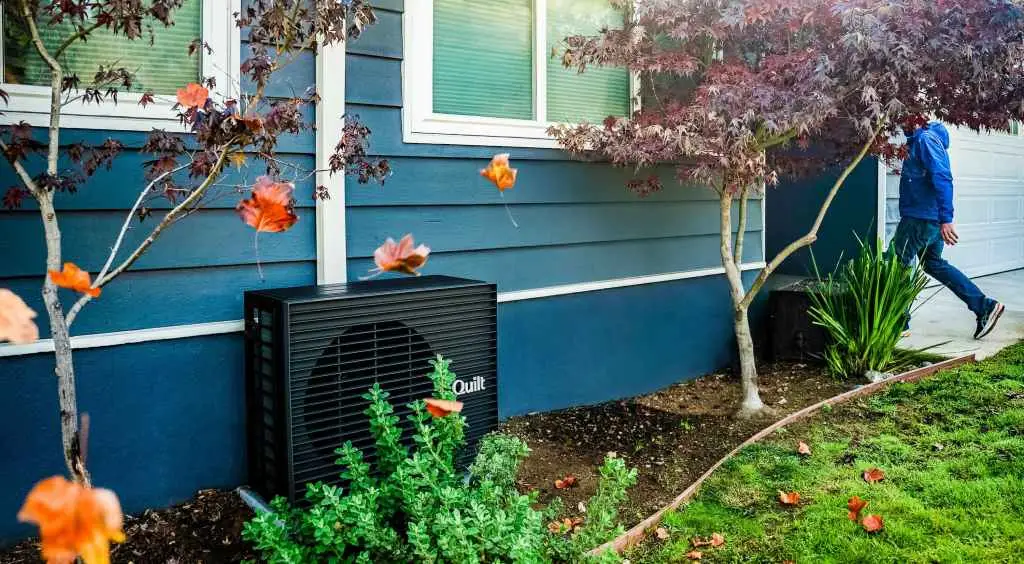
Heat pump efficiency has long struggled under real-world pressure, yet a young smart home company believes it has finally cracked the problem. Quilt has unveiled a new three-zone heat pump designed to stay efficient even when conditions push traditional systems to their limits. The launch signals a major step forward for modern HVAC design, especially as homeowners demand cleaner, smarter, and more reliable heating and cooling.
The newly introduced three-zone system allows one outdoor unit to power three indoor heads at once. That design simplifies large installations, cuts hardware costs, and reduces the amount of equipment sitting outside a home. For many properties, this approach removes the need for multiple outdoor compressors while still delivering room-by-room comfort. The product also plays a central role in Quilt’s expansion strategy, which recently gained momentum following a fresh $20 million Series B funding round aimed at scaling sales and reach.
Yet the real breakthrough is not just the hardware. It is the way Quilt built it. From day one, the company focused on data as a core advantage. Every Quilt heat pump is internet-connected and packed with more sensors than most competing systems. These sensors constantly report how the units behave in everyday use, not just in controlled test environments. That steady stream of real-world data has allowed Quilt engineers to refine performance in ways legacy manufacturers rarely attempt.
That data-driven approach already paid off once. Last September, Quilt released an over-the-air software update that unlocked roughly 20 percent more capacity in existing systems. Owners received the improvement at no cost. During extreme heat or cold, that extra capacity could be directed to one or two zones, keeping homes more comfortable without replacing hardware. Few HVAC companies can claim that kind of post-installation upgrade.
The same insight helped Quilt tackle one of the toughest challenges in multi-zone heat pumps. Like all modern systems, multi-zone units are most efficient when they run at variable speeds. When demand is low, the compressor slows down and delivers only what is needed. The problem is that compressors become unstable at very low speeds. Control becomes difficult, efficiency drops, and comfort can suffer.
Matthew Knoll, co-founder and CTO at Quilt, compares the issue to driving a car. Cruising smoothly at highway speed is easy, but holding a perfectly steady crawl takes far more effort. Because of this limitation, many systems simply shut the compressor off once demand falls below a certain point. That decision saves the machine but costs homeowners both efficiency and comfort.
Quilt took a different path. By studying data from roughly a thousand installed units across varied climates, engineers could see exactly how their systems behaved outside the lab. Instead of designing for averages, they optimized for reality. When something unusual appeared in the data, they could check whether it was a rare edge case or a broader opportunity for improvement. This constant feedback loop shaped the new three-zone system from the inside out.
Hardware choices also played a role. Quilt uses a larger copper coil than many competitors, which allows the system to rely on a smaller compressor. Combined with other refinements, this setup lets the heat pump deliver close to 90 percent of its rated 27,000 BTUs even at minus 13 degrees Fahrenheit. Importantly, it achieves that output without sacrificing low-demand efficiency, a balance that has been difficult for multi-zone systems to strike.
The result is a system Quilt claims is the most efficient three-zone mini-split currently available. Each indoor head operates independently, supplying as little as 2,210 BTUs of heat or 1,570 BTUs of cooling when needed. When a room does not require conditioning, refrigerant continues flowing through the lines, just as it does in other heat pumps. Thanks to the outdoor unit’s ability to run smoothly at very low speeds, it releases only about 300 BTUs of heat in heating mode. That amount is roughly equal to the heat generated by a single adult, making unwanted temperature swings far less noticeable.
This level of control matters as homes become more energy conscious. By avoiding frequent starts and stops, the system reduces wasted power while maintaining steady comfort. It also aligns well with smarter energy use, especially in homes that pair heat pumps with solar power or time-of-use electricity plans.
Looking ahead, Quilt is keeping its roadmap quiet. Knoll says only that the company wants to offer solutions for every type of home. Given its reliance on continuous data and software updates, future products will likely follow the same pattern. Instead of static machines, they will behave more like living systems that improve over time. If that vision holds, Quilt’s approach could reshape how the industry thinks about heat pump performance and long-term value.