Runware AI just secured a fresh fifty million dollars to push its mission of building one API for all AI. The raise was led by Dawn Capital with Speedinvest, Comcast Ventures, Insight Partners, a16z speedrun, Zero Prime Ventures, and Begin Capital joining in. The company had already raised thirteen million dollars in September. Together, these investments highlight the rising demand for faster global media generation.
The company operates from San Francisco and London. It plans to use the new funding to expand its AI platform and deploy more than two million new models from Hugging Face by the end of twenty twenty six. That requires new hires, deeper platform development, and major upgrades to its custom Sonic Inference Engine.
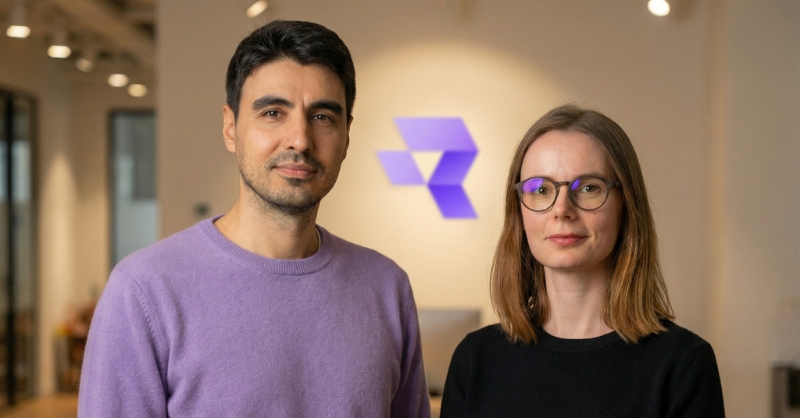
Runware AI was founded in twenty twenty three by Flaviu Radulescu and Ioana Hreninciuc. Their vision started with a simple frustration. Creative teams wanted powerful generative tools, but most systems were too slow for real work. Radulescu set out to solve this by designing a platform that could scale to millions with real time speed.
This idea pushed Runware AI into the center of the media generation ecosystem. Developers now use it to build image, audio, and video tools that feel instant for end users. The platform delivers up to ten times better performance than traditional setups and reduces costs through a single API.
The Sonic Inference Engine gives Runware AI its technical edge. The system pairs custom hardware with optimized software. This combination supports faster generation speeds and leaner operations than GPU based infrastructures. As a result, more developers are choosing Runware AI for high traffic experiences.
Today the company has powered more than ten billion creations. Over two hundred thousand developers and more than three hundred million end users rely on the platform. Brands like Wix, Together.ai, ImagineArt, Quora, and Higgsfield use Runware AI to run large scale creative features.
The broader media generation world has long struggled with messy toolchains. Latency is also a major issue. Rising compute costs make experimentation even harder. Runware AI targets all these problems at once. Its single API pulls nearly three hundred model classes and more than four hundred thousand variants into a unified structure.
This unified approach makes testing faster. Developers can switch models with tiny code changes. They can A B test features without rewriting workflows. They can deploy new models without learning new systems. This freedom reduces friction from early experiments all the way to production rollout.
Performance continues to be one of Runware AI’s strongest advantages. The Sonic Inference Engine often outpaces rival setups by thirty to forty percent for open source models. It cuts costs by five to ten times compared to incumbents. Even against closed systems, Runware AI still delivers ten to forty percent savings.
The platform’s custom inference hardware helps unlock these gains. The hardware provides strong performance without the cost structure of a classic data center. It also helps the company scale quickly without long construction timelines or massive power infrastructure investments.
Runware AI’s inference PODs make this even more efficient. These units are designed to be one hundred times cheaper and far faster to deploy than traditional data centers. The company can place them closer to users, lowering latency and helping teams meet local AI and data regulations.
Radulescu says this flexibility is key. He believes most products will soon depend on AI as a foundational layer. He explains that Runware AI was built to run AI faster and with lower latency while maintaining strong redundancy. He adds that inference PODs can go live in three weeks instead of three years.
Hreninciuc points to the rising pressure on product teams. Scaling AI features to millions of users is now essential. Yet it remains expensive and technically complex. She says Runware AI removes those barriers. Teams get one API that handles everything without juggling multiple providers or negotiating huge commitments.
Through Runware AI, customers ship unlimited AI features to end users. Many of them hit repeated growth peaks as performance improves and new features roll out. The platform becomes a growth engine rather than a technical bottleneck.
Investors see this shift as well. Dawn Capital partner Shamillah Bankiya says Runware AI already resonates with global companies building AI powered media applications. She notes that the platform delights developers and satisfies enterprise standards while bending the cost curve in the customer’s favor.
Bankiya adds that Runware AI is the right product built at the right layer by the right team. She sees the market as large, urgent, and ready for a major infrastructure player. The new funding signals that investors expect Runware AI to play a central role in that future.
The timing aligns with the growth of the global inference market. Analysts expect it to reach sixty eight billion dollars by twenty twenty eight. As AI driven products multiply, the need for faster, cheaper inference rises sharply. Runware AI is positioning itself as the backbone of this shift.
The company believes the next decade will be defined by real time digital creation. Everything from creative tools to consumer apps to enterprise platforms will need instant media generation. Runware AI aims to power that moment with a single API, custom hardware, and rapid global deployment.
With fresh capital and strong developer traction, Runware AI is moving quickly. The company plans to deepen its infrastructure, expand into new regions, and keep pushing inference performance forward. Its goal is simple. Make AI faster, cheaper, and easy to deploy at massive scale.
The race to support millions of real time AI users has already begun. Runware AI wants to be the engine behind it.