Meta-backed Hupo is proving that the right pivot can unlock powerful growth, especially when artificial intelligence meets real business pain. What began as a mental wellness experiment has now evolved into a fast-scaling AI sales coaching platform built for banks, insurers, and financial services firms that struggle to train teams consistently at scale.
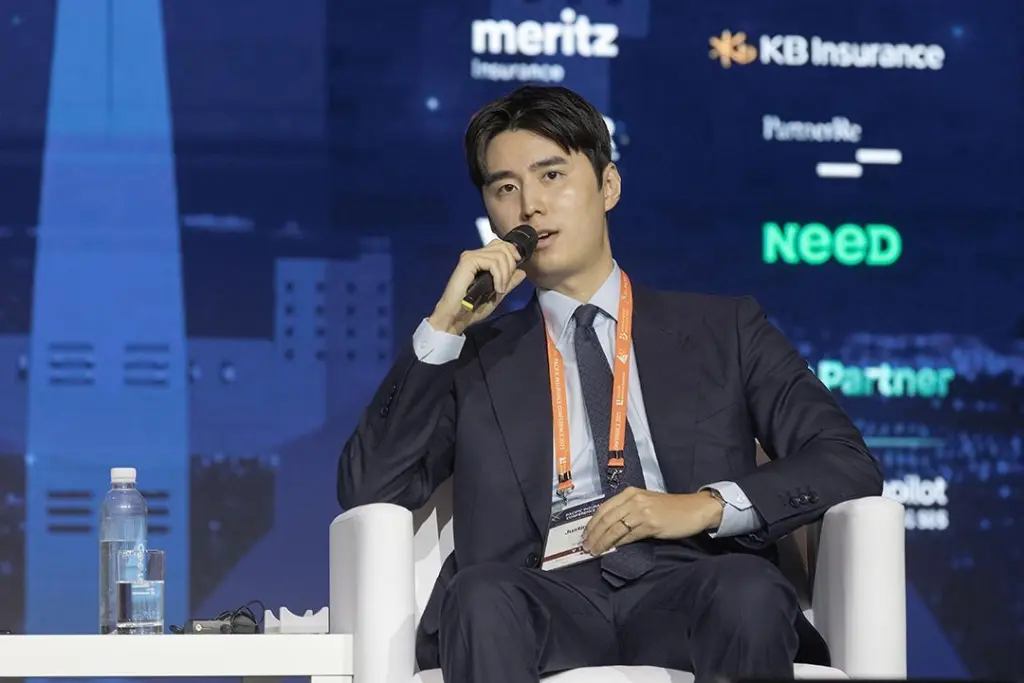
About four years ago, Justin Kim launched his startup under a different name and a very different mission. The original product, called Ami, focused on mental wellness and personal performance. It explored how people manage pressure, build habits, and change behavior over time. Kim’s fascination with performance came from years of following competitive sports, where preparation, mindset, and feedback often matter more than raw talent.
That curiosity gradually shifted toward the workplace. Kim noticed that performance at work, especially in high-pressure roles, followed similar patterns to elite sports. People did not fail because they lacked motivation. Instead, they struggled due to inconsistent feedback, uneven training, and limited confidence in critical moments. This insight led him to found the company in 2022, with the goal of improving performance through better support rather than judgment.
Early backing from Meta played a key role in shaping that philosophy. Through its seed involvement, Kim learned that software only works when it fits naturally into how people already behave. Tools that feel abstract, intrusive, or judgmental rarely change outcomes. That lesson stayed with the company as it searched for stronger product-market fit.
The turning point came when Kim realized the same performance problems existed at a massive scale inside banks and insurance firms. Sales outcomes varied wildly across teams, even when products, incentives, and markets were similar. Traditional coaching could not keep up. Managers could not listen to every call or sit in on every meeting. Feedback arrived late, if at all, and often missed the moment when it mattered most.
Rather than viewing this as a departure from mental wellness, Kim saw it as a natural extension. In both cases, the core issue was performance at scale. The difference was context. In financial services, the stakes were higher, the regulations stricter, and the need for consistency far more urgent. Advances in AI made it possible to understand conversations in real time and offer guidance without replacing human judgment.
That insight led to the birth of Hupo, an AI-powered sales coaching platform designed specifically for banking, financial services, and insurance. Instead of generic prompts, Hupo’s models are trained on real financial products, common customer objections, client profiles, and regulatory rules. The system delivers coaching during real conversations, helping sales teams adjust their approach in the moment rather than after the fact.
This industry-first focus has fueled rapid adoption. Hupo recently closed a $10 million Series A round led by DST Global Partners, with participation from Collaborative Fund, Goodwater Capital, January Capital, and Strong Ventures. The round brings total funding to $15 million since the company’s founding.
The Singapore-headquartered startup already serves dozens of enterprise customers across Asia-Pacific and Europe. Its client list includes global financial giants such as Prudential, AXA, Manulife, HSBC, Bank of Ireland, and Grab. According to Kim, customers often expand their contracts three to eight times within the first six months, a rare achievement in the notoriously conservative BFSI sector.
The company is now preparing to enter the United States in the first half of the year. Kim believes the US market is a natural next step because of its distribution-heavy financial models and intense competition among sales teams. In such environments, even small improvements in consistency and confidence can drive meaningful revenue gains.
Kim’s background helps explain why Hupo resonates with financial institutions. He began his career at Bloomberg, selling enterprise software to banks, asset managers, and insurers. There, he saw firsthand how complex regulated sales environments could be. He later worked on product development at Viva Republica, the company behind Toss, where he learned how technology designed around real user behavior could transform traditional finance.
Those experiences converged at Hupo. Kim understood the buyer, the frontline sales employee, and the operational constraints of regulated industries. When AI matured enough to understand context and intent in real time, applying it to sales coaching felt inevitable. Unlike many AI sales tools that start with flashy technology, Hupo started with the workflow of banks and insurers and built from there.
The new funding will accelerate that strategy. Hupo plans to expand its real-time coaching features, scale enterprise-grade deployments, and grow its go-to-market efforts across banking, financial services, and insurance. The company is also hiring aggressively to support product development and international expansion.
Looking ahead, Kim envisions Hupo evolving beyond sales. Over the next five years, he wants the platform to help large organizations improve performance across entire teams, offering clear insights and practical guidance to tens of thousands of employees at once. The goal is not to replace managers, but to give them better visibility and their teams more timely support.
For Hupo, the journey from mental wellness to AI sales coaching underscores a broader truth in enterprise technology. Performance problems rarely come from lack of effort. They come from lack of consistent, contextual feedback. By embedding AI into the moments that matter most, Hupo has turned a thoughtful pivot into a powerful growth engine.