Startup creation has long been treated as something closer to art than engineering. Founders are encouraged to embrace uncertainty, trust instinct, and improvise their way forward. While this narrative has produced compelling stories, it has also normalized an enormous amount of waste. Foundersmax is quietly challenging that mindset by approaching startup creation as an industrial process, one that can be structured, refined, and repeated without stripping away ambition.
Rather than framing entrepreneurship as a sequence of unpredictable breakthroughs, Foundersmax treats it as a system that can be improved over time. The venture studio is focused on repeatability, not because it expects identical outcomes, but because it believes the path from idea to operating company should be less fragile than it currently is.
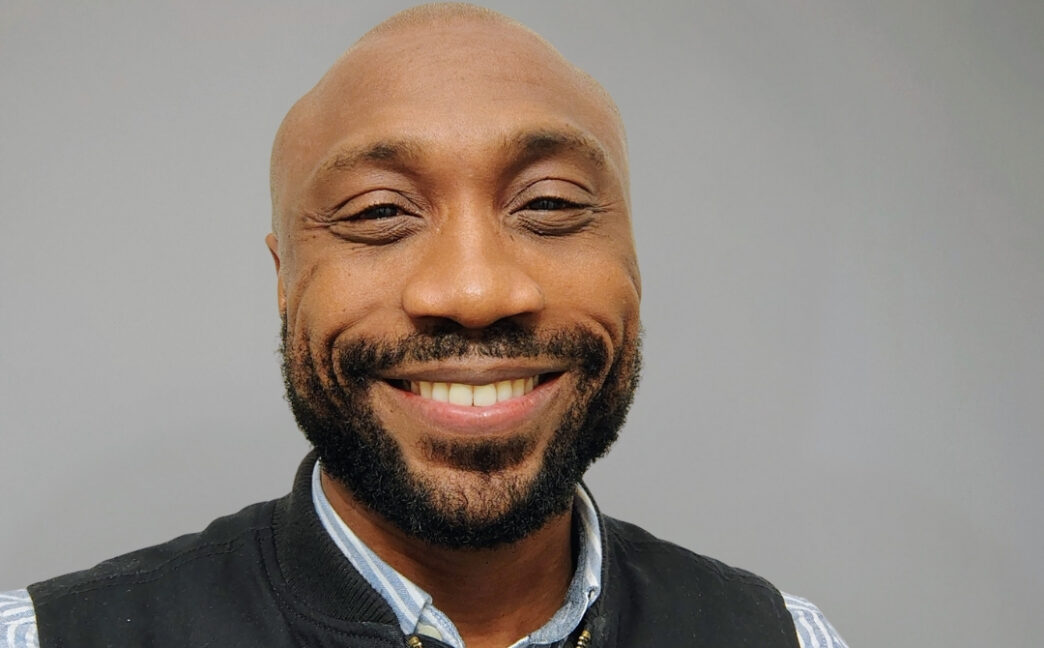
Founded by Sam Ojei, Foundersmax operates on the assumption that most early-stage startups fail for reasons that are neither mysterious nor rare. The same execution problems surface repeatedly across industries. Teams rebuild technical foundations from scratch. Early product decisions are made without sufficient context. Hiring lags behind demand. Go-to-market strategies are launched before internal systems are ready to support them. These breakdowns are so common that treating them as inevitable is increasingly hard to justify.
Foundersmax’s response is structural. Instead of letting each startup reinvent the entire company-building process, the studio centralizes execution at the platform level. Product development, engineering, design, and operational decision-making are shared across ventures. This allows multiple companies to be built simultaneously while drawing from the same infrastructure and institutional knowledge.
In effect, Foundersmax treats startup creation less like a craft workshop and more like an evolving production system. Each new venture benefits from lessons learned in previous builds. Technical architectures are chosen with long-term sustainability in mind. Validation frameworks are refined through repeated application. Operational processes improve as patterns emerge. Over time, this creates a compounding advantage that individual startups rarely achieve alone.
Unlike accelerators, Foundersmax does not impose fixed timelines or cohort structures. There are no demo days forcing premature conclusions. Instead, progress is guided by milestone-driven build cycles. Product readiness, user validation, and operational maturity determine when a venture moves forward. This allows companies to develop at the pace their complexity requires rather than the pace a program dictates.
Inside the studio, cross-venture collaboration is a deliberate design choice. Engineers, designers, and operators rotate between projects, carrying experience with them. A technical bottleneck identified in one startup informs architecture decisions in another. A failed experiment becomes institutional knowledge rather than a private lesson. This circulation of insight allows execution quality to improve systematically rather than episodically.
Foundersmax operates across multiple sectors, including AI-driven products, education platforms, and digital tools. Each venture targets its own market and develops its own strategy. What remains consistent is the way foundational decisions are approached. The studio does not standardize ideas, but it does standardize how ideas are tested, built, and operationalized.
This approach reshapes the role of the founder. Founders remain the leaders and owners of their companies. They are not absorbed into the studio or reduced to operators executing someone else’s vision. Instead, Foundersmax embeds itself into the execution layer, acting as a long-term partner that handles shared complexity while founders focus on direction and differentiation.
For many founders, this model addresses a common frustration. Early-stage building often requires solving the same problems others have already solved, but without access to their solutions. Foundersmax lowers that barrier by pooling execution resources and experience. The result is not less ownership, but less friction.
Sam Ojei has described the studio’s philosophy as execution-first, a stance that contrasts sharply with pitch-driven startup culture. Foundersmax deliberately deprioritizes early visibility. Teams are encouraged to ship, test, and iterate before seeking attention. The belief is that industrial-strength execution creates optionality, while premature exposure creates pressure.
This philosophy extends to how the studio approaches capital. Fundraising is not treated as the primary indicator of success. Instead, Foundersmax emphasizes operational signals such as user engagement, revenue traction, and system reliability. These metrics reflect whether a company can function under real conditions. When founders do raise capital, they do so with leverage rather than desperation.
Internally, Foundersmax invests heavily in its own infrastructure. Shared technical stacks, workflow automation, and operating processes are continuously refined. These investments are viewed as foundational, enabling the studio to scale company creation without increasing chaos. Each improvement benefits not just one venture, but every future build.
Data plays a central role in this evolution. Product outcomes, performance metrics, and go-to-market results are analyzed and fed back into the studio’s frameworks. Over time, this creates a feedback loop that sharpens judgment and reduces avoidable error. The studio becomes better at identifying which risks are worth taking and which can be engineered away.
Repeatability, in this context, is about reliability. Foundersmax does not claim it can guarantee success. Markets remain unpredictable, and innovation still demands experimentation. What the studio seeks to remove is unnecessary randomness—the kind that comes from rebuilding systems that already exist or repeating mistakes that others have already paid for.
As venture studios gain visibility globally, Foundersmax reflects a broader maturation of entrepreneurship. Startup creation is increasingly seen as something that can benefit from structure without becoming rigid. In this view, creativity thrives when supported by systems that reduce noise and amplify learning.
For founders who want to build durable companies rather than chase fleeting momentum, this approach offers a compelling alternative. Foundersmax replaces compressed programs with sustained execution and substitutes mythology with method. It treats startup creation not as a gamble, but as a process that improves with discipline and experience.
Under Sam Ojei’s leadership, Foundersmax is betting that the future of entrepreneurship will look less like inspiration and more like engineering. By industrializing execution without flattening ambition, the studio is redefining what repeatable startup building can mean in practice.