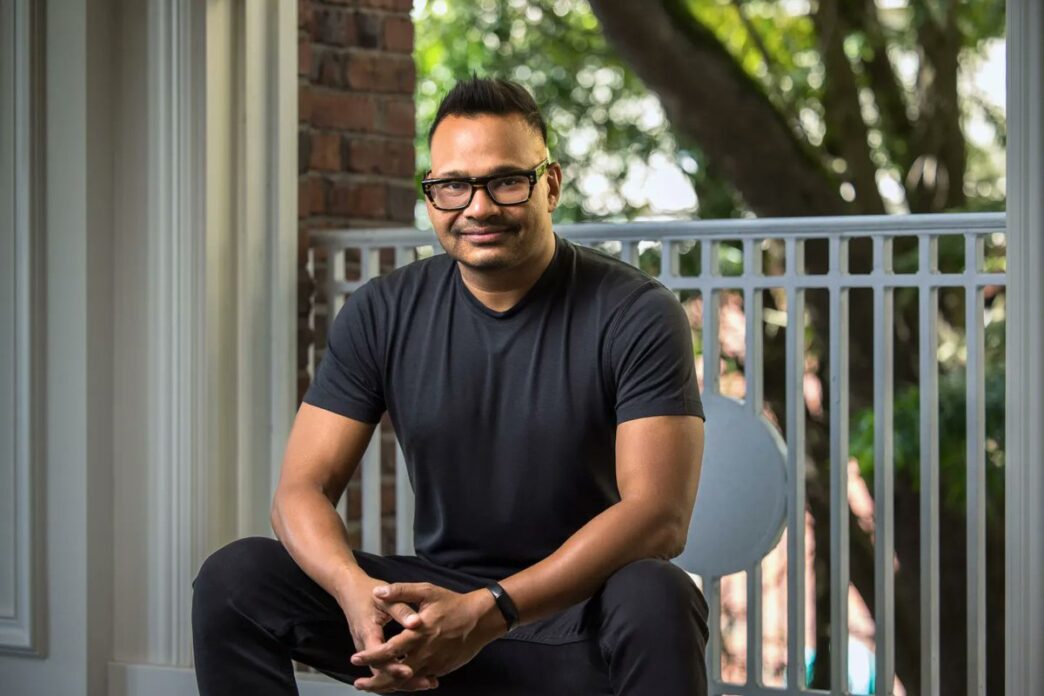
Harness AI just reached a five point five billion dollar valuation after raising two hundred forty million dollars in fresh funding. Founder Jyoti Bansal says the company is on track to pass two hundred fifty million dollars in ARR next year, showing how quickly demand is rising for tools that automate what happens after developers write code.
The round combines a two hundred million dollar primary investment led by Goldman Sachs with a planned forty million dollar tender offer. Long term employees will be able to sell some shares through that offer, giving them early liquidity as the company grows.
This raise lifts total funding to five hundred seventy million dollars. It also pushes the company’s valuation up forty nine percent from its last round in 2022. Investors see the growing need for automation as AI speeds up code production faster than software teams can safely ship it.
Bansal says the pressure on engineers has shifted. AI creates code at incredible speed, but the slowest part now lives in the after code phase. This includes testing, validation, security checks, governance steps, and deployment. These tasks still absorb nearly seventy percent of engineering time.
Companies feel the strain. Code piles up faster than teams can review or release it. The risk of shipping something faulty also increases. Harness AI was built to fix this widening gap.
The company uses AI agents to automate work that engineers usually dread. These agents scan changes, run tests, suggest fixes, validate security, and align actions with company rules. They use a knowledge graph that understands the full software delivery system of each customer.
Every service, pipeline, test, environment, incident history, and cost pattern sits inside that graph. Bansal says this deep context makes the platform stand out. Instead of offering generic automation, Harness AI acts with a detailed understanding of how each system works.
The AI agents then generate custom pipelines for each customer. They consider architecture, policy rules, and operational constraints. Once approved, an orchestration engine turns the AI’s suggestions into automated actions.
Human oversight stays in place. Engineers review AI generated tests and fixes. Compliance teams or auditors approve changes before anything goes live. Bansal says this balance between automation and human review is part of the company’s core design.
Harness AI’s biggest competitors include GitHub, GitLab, Jenkins, and CloudBees. Yet the company has carved out strong traction. It now supports more than one thousand enterprises. Customers include United Airlines, Morningstar, Keller Williams, and National Australia Bank.
The scale is massive. Harness AI has already handled one hundred twenty eight million deployments. It has run eighty one million builds. It has protected one point two trillion API calls. It has also helped companies reduce cloud spending by nearly one point nine billion dollars.
The workforce has grown as well. Harness AI employs more than twelve hundred people across fourteen global offices. One third of its team is based in India. Bengaluru has become the company’s largest engineering site outside the United States.
Bansal plans to hire hundreds of additional engineers there. The new funding will support expanded R and D, faster model improvements, and deeper automation across testing, deployment, and security.
His track record gives the company added credibility. Bansal built AppDynamics and sold it to Cisco for three point seven billion dollars. After that success, he focused on the pain engineers face once the code is written. That experience shaped Harness AI long before the recent surge of interest in generative AI.
Earlier this year, Bansal merged his observability startup Traceable with Harness AI. He says DevOps and application security now overlap so much that bringing both companies together made sense. The combined platform helped boost growth across both product lines.
He describes the merge as one of the most successful decisions the company made this year. Customers now expect faster releases and stronger security to happen in the same workflow. Harness AI is positioning itself as the layer that connects both.
The new funding round gave some employees the chance to cash out. Yet Bansal still sees a public listing in the future. He avoided giving a date. He says the priority is healthy growth, strong margins, and continued expansion into international markets.
He believes Harness AI already operates like a company that could go public. The demand for automation is rising as AI accelerates software creation. Enterprises now want predictable, safe, and scalable delivery systems that match the speed of AI generated code.
Harness AI plans to deepen its automation capabilities, refine its knowledge graph, and expand geographically. Bansal says the company will enter new markets, strengthen its U S go to market operations, and continue improving the accuracy of its AI systems.
The pressure on engineering teams continues to intensify. Traditional workflows cannot keep up with the volume of AI produced output. Companies know they need new tools to ship software without slowing down or increasing risk.
Harness AI has positioned itself directly in the center of this shift. With new capital, stronger automation tools, and a growing global team, the company aims to close the after code gap and redefine how modern software gets delivered.