The CES 2026 spotlight delivered a clear and urgent message from global business leaders. The era of learning once and relying on that knowledge for an entire career is officially over. As artificial intelligence accelerates at a historic pace, executives now agree that continuous learning has become a survival skill, not a career advantage. The CES 2026 conversation around AI and work reflected both excitement and deep urgency as leaders described a future already unfolding.
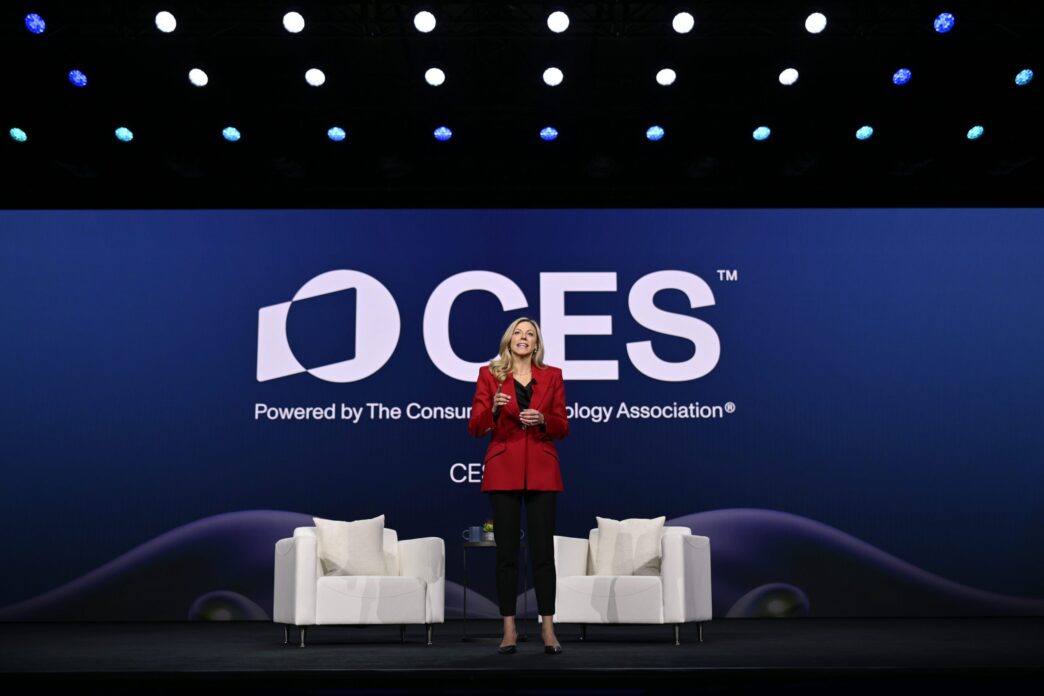
During a live taping of the All-In podcast at CES 2026, co-host Jason Calacanis led a wide-ranging discussion with McKinsey & Company Global Managing Partner Bob Sternfels and Hemant Taneja, CEO of General Catalyst. Their conversation focused on how AI is rewriting investment timelines, workforce structures, and long-held assumptions about careers.
Taneja set the tone early by stating that the world has fundamentally changed. He explained that AI-native companies are growing at a speed never seen before in modern business history. In previous generations, companies needed more than a decade to reach massive valuations. Today, that timeline has collapsed dramatically. He pointed to Anthropic as a clear example, noting how the company jumped from a $60 billion valuation last year to well over $200 billion in a remarkably short period.
That rapid rise, according to Taneja, is not an isolated event. He believes the market is entering a phase where multiple trillion-dollar companies could emerge far faster than expected. Firms such as OpenAI are no longer viewed as distant moonshots. Instead, they represent a new economic reality driven by AI leverage, speed, and global scalability. CES 2026 discussions made it clear that capital markets are adjusting quickly to this shift.
Calacanis pressed further, asking what fuels such explosive growth beyond hype. Sternfels offered a grounded perspective from the consulting front lines. He explained that while many organizations are experimenting with AI tools, most non-technology companies remain hesitant to fully commit. According to Sternfels, CEOs repeatedly face a difficult internal debate that defines this moment. They ask whether to listen to their CFOs, who focus on short-term returns, or their CIOs, who warn that hesitation could lead to disruption.
CFOs often see limited immediate ROI from AI pilots. They argue for caution and delayed investment. CIOs, on the other hand, believe delay carries greater risk. Sternfels described how CIOs increasingly view AI adoption as unavoidable. In their view, standing still is no longer neutral. It is a strategic mistake that could leave companies behind competitors moving faster.
CES 2026 also surfaced deeper concerns about how AI reshapes human work. Calacanis raised a question on the minds of students and young professionals worldwide. Many fear AI could replace entry-level roles traditionally filled by recent graduates. This anxiety is growing as AI systems handle tasks once considered stepping stones into professional careers.
Sternfels responded by emphasizing that AI excels at execution but lacks human judgment. While models can process information at scale, humans still provide creativity, ethical reasoning, and decision-making in uncertain environments. These qualities, he argued, will become more valuable, not less, as AI expands. CES 2026 highlighted that success will depend on pairing human insight with machine capability.
Taneja expanded on this idea by challenging the very structure of modern education and employment. He described the long-standing model of spending two decades learning followed by four decades working as outdated. In an AI-driven economy, learning never stops. Skills must evolve continuously to stay relevant. Reskilling, he said, is no longer optional or occasional. It is permanent.
This shift changes how individuals should approach their careers. According to the CES 2026 discussion, adaptability now outweighs static expertise. Workers must be willing to reinvent themselves repeatedly. Taneja argued that the most resilient professionals will be those who view learning as part of daily work rather than a phase that ends after school.
Calacanis agreed and added a cultural dimension. He suggested that technical ability alone will not set people apart in an AI-saturated world. Instead, drive, passion, and initiative will define differentiation. When AI agents can be built faster than humans can be trained, personal energy and ambition become competitive assets.
Sternfels offered a concrete example of how this transformation is unfolding inside McKinsey itself. He revealed that by the end of 2026, the firm expects to deploy as many personalized AI agents as it has employees. These agents will support consultants with research, analysis, and internal workflows. However, this shift does not mean mass layoffs.
Instead, McKinsey is rebalancing its workforce. The firm plans to increase client-facing roles by 25 percent while reducing back-office positions by a similar margin. CES 2026 discussions framed this as a reallocation of human effort rather than a reduction. AI handles routine tasks, freeing people to focus on higher-value work with clients.
This restructuring reflects a broader trend across industries. AI does not simply remove jobs. It reshapes them. Roles evolve, responsibilities shift, and new career paths emerge. The challenge lies in managing this transition without leaving workers behind.
CES 2026 made one reality impossible to ignore. AI is not a future disruption. It is a present force reshaping how companies grow, invest, and hire. Leaders who cling to old assumptions risk falling behind. Workers who stop learning risk irrelevance.
The message from McKinsey and General Catalyst was firm yet pragmatic. Continuous learning is now the foundation of career security. Companies must invest in people alongside machines. Individuals must embrace change rather than fear it. CES 2026 showed that while AI accelerates uncertainty, it also opens unprecedented opportunity for those ready to adapt.