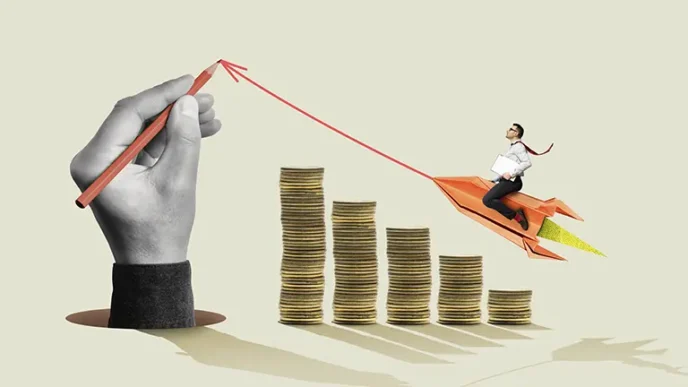

The return of silent investors marks a quiet but decisive shift in how capital behaves in today’s startup and private market landscape. For years, visibility was treated as power. Investors tweeted theses, founders optimized for narrative, and fundraising became a public performance. However, that era is fading fast. In its place, a quieter class of investors is re-emerging, and they are reshaping incentives across the ecosystem. The focus keyword, the return of silent investors, reflects more than a stylistic change. It signals a deeper correction in how risk, patience, and influence now work.
For a long time, loud capital dominated. Investors signaled value by being visible, opinionated, and constantly present. This behavior made sense in an environment where momentum mattered more than fundamentals. When capital was abundant, attention acted as leverage. Founders benefited from association, and investors benefited from deal flow driven by reputation. Yet as conditions tightened, the cost of noise increased. Every public take aged faster. Every bold prediction created accountability. As a result, many investors began to step back.
Silent investors are not passive. Instead, they are deliberate. They move slower, ask harder questions, and avoid unnecessary exposure. Rather than broadcasting intent, they focus on execution and outcomes. This shift matters because it changes how founders must operate. When investors stop signaling publicly, startups lose easy social proof. Consequently, traction, discipline, and clarity regain importance. This recalibration is uncomfortable, but it is healthy.
The return of silent investors is also tied to learning. Over the last cycle, many investors discovered that visibility did not equal insight. Public conviction often masked shallow diligence. Meanwhile, some of the best-performing funds avoided the spotlight entirely. They focused on small portfolios, deep involvement, and long-term alignment. As results diverged, the lesson became obvious. Quiet competence outperformed loud confidence.
Another force driving this return is risk management. In volatile markets, optionality matters. Silent investors preserve flexibility by staying out of public narratives. They can change their minds without reputational damage. They can exit quietly or double down without explanation. This discretion is valuable when information is incomplete and timelines are uncertain. Therefore, silence becomes a strategic advantage rather than a lack of engagement.
At the same time, founders are changing. Many are no longer optimizing for hype. Burnout, down rounds, and failed growth experiments have taught painful lessons. As a result, a growing number of founders prefer investors who listen more than they talk. They want partners who show up in board meetings, not on social media. Silent investors fit this need well. They bring fewer distractions and clearer expectations.
The return of silent investors also reflects a broader maturity in the market. Early-stage ecosystems often reward visibility because trust is scarce. Over time, as networks deepen, trust becomes private. Introductions happen quietly. Deals close without fanfare. This evolution mirrors older capital markets, where the most influential players rarely seek attention. Power concentrates, then disappears from view.
Importantly, silence does not mean absence. These investors are still active, but their activity looks different. They spend more time on diligence and less on branding. They write fewer checks, but support companies longer. They ask founders to justify assumptions, not amplify stories. This approach reduces speed, yet it increases resilience. In uncertain environments, resilience matters more than velocity.
There is also a signaling effect at play. When investors go quiet, founders must infer interest from behavior, not words. This dynamic rewards clarity and consistency. If an investor keeps showing up, asking thoughtful questions, and following through, their commitment is clear. If not, silence exposes indifference. This transparency, while subtle, improves alignment on both sides.
The return of silent investors challenges media narratives as well. Startup coverage often depends on announcements, rounds, and personalities. Quiet capital disrupts this model. Fewer press releases mean fewer hype cycles. Consequently, companies grow offstage for longer. When they reappear, they are often stronger and more defensible. This pattern reduces volatility and resets expectations.
Critically, this shift does not eliminate loud investors. Instead, it rebalances the ecosystem. Some investors will always trade in attention. However, the premium on noise is declining. Results now matter more than reach. Track records matter more than followings. Over time, capital flows toward those who compound quietly rather than perform publicly.
From a strategic perspective, the return of silent investors also affects valuation dynamics. Without public competition for deals, pricing becomes more rational. Negotiations slow down. Terms reflect risk again. While this frustrates some founders, it ultimately creates healthier companies. Sustainable growth replaces artificial acceleration.
There is a cultural dimension too. Silence encourages humility. Investors who stop broadcasting become more open to learning. They rely less on personal brand and more on collective judgment. This shift improves decision quality. It also reduces the performative pressure that previously distorted incentives across the market.
Looking ahead, this trend is unlikely to reverse quickly. As long as uncertainty remains high, discretion will be rewarded. Founders who adapt will benefit. They will focus on building durable value rather than chasing visibility. They will choose investors based on behavior, not reputation alone. In turn, silent investors will continue to accumulate influence without drawing attention.
The return of silent investors is not a retreat from engagement. It is a recalibration of power. Capital is becoming quieter because noise no longer pays. In this new environment, patience, rigor, and trust quietly outperform hype. Those who understand this shift early will build stronger companies and better portfolios. Those who do not may keep talking, but they will increasingly be talking to themselves.