AI startup Mercura raises over 2.1 million US dollars in a major early win that signals growing investor confidence in industrial AI automation. The Munich-based company has secured more than 2.1 million US dollars in an oversubscribed seed round, achieving the raise while remaining profitable. The round attracted strong interest from global and European backers, reinforcing Mercura’s position as one of the most promising applied AI startups in the industrial and wholesale sales space.
The seed financing was led by TQ Ventures, SignalFire, and Y Combinator, with participation from several well-known business angels across Europe’s technology ecosystem. Investor demand exceeded the original target, making the round oversubscribed and underlining the urgency many see in modernising industrial sales workflows.
Among the private investors are prominent technology leaders who bring both capital and operational insight. These include Bastian Nominacher, Tao Tao, and Lukas Deutsch. Their involvement adds credibility and strategic depth as Mercura prepares for its next growth phase.
Mercura focuses on automating quotation, order, and tendering processes that still rely heavily on manual work across wholesale and industrial sectors. Customer inquiries in these industries often arrive as emails, PDFs, spreadsheets, or handwritten specifications. Mercura’s AI ingests this unstructured data and converts it into structured, product-specific quotes or orders in minutes rather than days.
This approach targets industries that remain under-digitised despite their size and importance. Construction, electrical engineering, building technology, and technical building equipment depend on complex catalogs, custom configurations, and fragmented data sources. These realities slow down sales cycles and introduce costly errors. Mercura’s software removes friction by handling complexity automatically, allowing sales teams to focus on customer relationships instead of paperwork.
At the core of the platform are proprietary AI models designed specifically for industrial sales. Unlike generic language models, Mercura’s systems are trained on domain-specific data and paired with an in-house product matching engine. This engine understands technical attributes, compatibility rules, and customer-specific requirements, producing accurate outputs that align with real-world constraints.
The AI agents behave like seasoned sales professionals who improve over time. Through reinforcement learning, the system adapts to feedback from accepted quotes, rejected offers, and pricing adjustments. As a result, accuracy improves continuously, even in environments once considered too complex for automation.
Mercura’s technology integrates directly with existing ERP and CRM systems, reducing implementation friction. This compatibility allows customers to adopt the platform without replacing core infrastructure. For many industrial firms, that seamless integration is critical, as legacy systems are deeply embedded in daily operations.
The market opportunity behind this approach is substantial. Global wholesale and industrial distribution is estimated to represent an eight trillion US dollar market. Even modest efficiency gains translate into significant economic value, making automation an urgent priority rather than a future ambition.
What sets Mercura apart is its financial discipline. The company has been profitable since its founding and operated without external capital until now. This track record is rare among AI startups and played a key role in attracting high-quality investors. Profitability demonstrates that customers see immediate value and are willing to pay for the solution.
Mercura already serves manufacturers and wholesalers across Europe and the United States. Its customer base includes Bauder, Reisser AG, Siteco, and the Dutch BME Group, which also encompasses BAUKING and SHK Deutschland. These references highlight the platform’s ability to perform at scale in demanding industrial environments.
With fresh capital secured, Mercura plans to accelerate growth. The company intends to expand its engineering team, further refine the product matching engine, and push into additional international markets. Management is targeting double-digit million revenue by 2026, reflecting confidence in both demand and scalability.
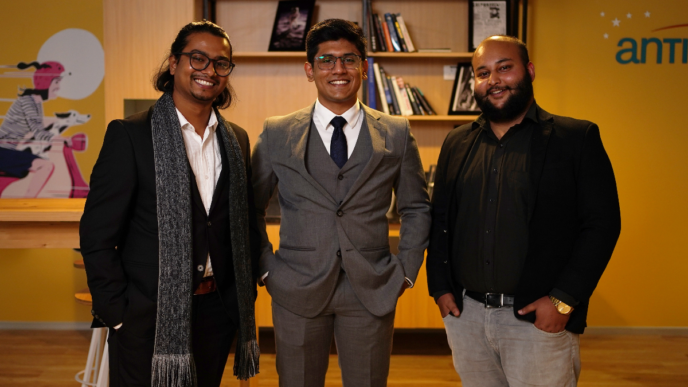
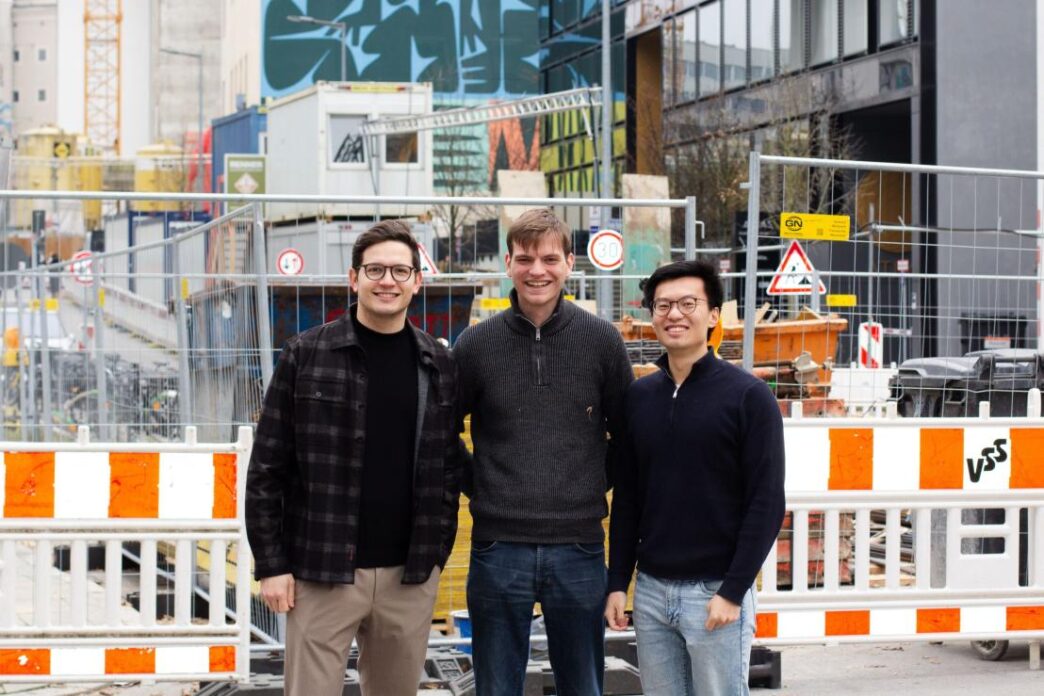
The founding team combines deep industry roots with advanced AI expertise. CEO Lukas Bock comes from a family business with more than a century of industrial history and previously worked at Google X in Silicon Valley. His background bridges traditional industry and frontier technology.
Co-founder Stefan Zheng brings experience from consulting and venture capital, supporting commercial strategy and execution. Sean Sdahl adds strong technical depth, having trained as a physicist at the Max Planck Institute before working as a software engineer at Bosch and Mercedes-Benz AMG. Together, the team blends domain knowledge, business acumen, and applied AI research.
As industrial companies search for ways to improve efficiency without disrupting operations, Mercura’s timing appears ideal. The successful seed round, combined with early profitability, positions the startup to scale responsibly while tackling one of the largest and least digitised markets in the global economy.