AI prenatal care is emerging as one of the most promising shifts in modern healthcare, yet it faces its toughest test in fetal heart screening. Congenital heart defects remain difficult to detect before birth. Standard ultrasound exams depend heavily on operator skill, experience, and time.
Even with advanced machines, results can vary widely between clinics and clinicians. Subtle cardiac abnormalities are often missed during routine scans. This inconsistency can delay diagnosis and limit treatment options for families.
That challenge is exactly where BrightHeart sees opportunity. By embedding AI prenatal care directly into ultrasound workflows, the company aims to make fetal heart screening more accurate, consistent, and reliable in everyday clinical practice.
BrightHeart’s B-Right AI Platform works directly inside standard ultrasound systems. It supports clinicians in real time as they scan the fetal heart. The software guides them through complex anatomy and ensures key cardiac views are captured. Importantly, it does this without changing existing workflows.
Today, the company raised €11 million in Series A funding. The round was co-led by Odyssée Venture and GO Capital. Several strategic investors also joined, including the Mussallem CHD Alliance and Sofinnova Partners.
A group of clinicians and medtech founders also participated. Among them were Prof. Laurent Salomon, Sacha Loiseau, and John Gridley. Their involvement adds strong clinical and industry credibility to the round.
The new funding will help BrightHeart expand into the US market. It will also support wider growth across Europe. At the same time, the company plans to further improve its AI models and clinical performance.
This expansion follows a strong year for BrightHeart. In 2025, the company secured five FDA clearances. It also announced partnerships with leading academic medical centers. Two peer-reviewed studies validated its technology and clinical results.
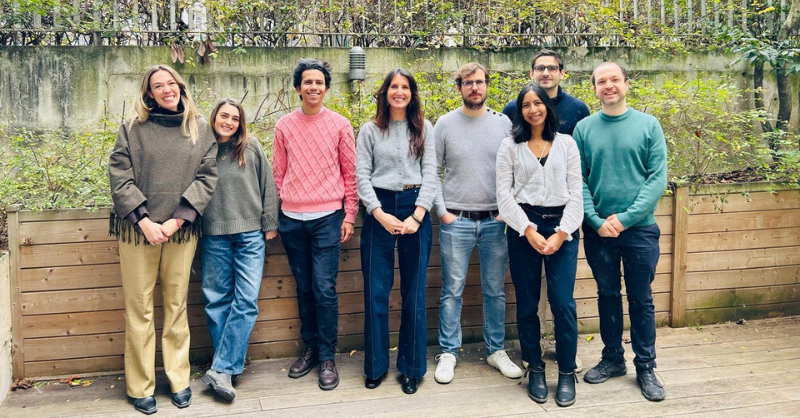
BrightHeart was founded on a simple insight. Ultrasound quality often depends more on the operator than the machine. Cécile Dupont, CEO and co-founder, saw this firsthand. She realized that even the best equipment cannot guarantee consistent results without guidance.
“Our goal is to enhance diagnostic accuracy and improve outcomes for families,” Dupont explains. She also emphasizes reducing pressure on healthcare professionals. The platform is designed to support, not replace, clinicians during exams.
The AI works by analyzing ultrasound images as they are captured. It tracks fetal anatomy and recognizes specific cardiac views. Automated quality checks alert clinicians if a required image is missing or unclear. This reduces the risk of incomplete exams.
Clinical trials show promising results. BrightHeart reports detection accuracy above 96 percent for congenital heart defects. This level of performance is rarely seen in routine prenatal screening. It suggests AI guidance can help bring expert-level exams into everyday practice.
Ease of adoption has been a major focus. The platform is designed as a plug-and-play solution. Hospitals do not need to replace machines or redesign workflows. Clinicians can use the system with minimal training.
The market for AI-driven ultrasound is becoming competitive. Companies such as GE HealthCare, Caption Health, and Sonio are also active in this space. However, BrightHeart stands out for its deep focus on fetal heart imaging.
Congenital heart defects are among the most common birth defects worldwide. Early detection can change outcomes dramatically. It allows care teams to plan interventions and prepare families before delivery. Accurate screening can also reduce emergency situations after birth.
As BrightHeart moves into the US market, regulatory trust will be critical. FDA clearances help build confidence among hospitals and clinicians. They also make adoption easier in highly regulated healthcare environments.
Europe remains another priority. Many health systems are seeking AI tools that improve quality without adding complexity. BrightHeart’s seamless integration aligns well with these needs. Ongoing clinical research supports broader adoption.
Looking ahead, the company plans to expand beyond the fetal heart. Research is underway to cover additional fetal organs. Early-stage anomaly detection is also part of the roadmap.
According to Orin Herskowitz of the Mussallem CHD Alliance, embedding AI directly into ultrasound workflows is key. It helps make expert-level screening part of routine care. This shift could transform outcomes for CHD patients and their families.
The bigger question is whether AI will truly transform prenatal care. BrightHeart’s approach suggests it can. By improving consistency and supporting clinicians, AI becomes a trusted clinical ally. The latest funding round signals growing belief in that future.