Warner Bros. Discovery rejection has once again reshaped one of the most aggressive takeover battles in modern media history, as the company’s board firmly shut the door on Paramount Skydance’s latest bid. The decision highlights rising tension around debt, valuation, and long-term stability at a time when Hollywood studios face intense pressure from streaming rivals and shifting consumer habits.
The Warner Bros. Discovery rejection came after Paramount Skydance submitted a revised proposal valued at roughly $108.4 billion. Despite the headline number, Warner Bros. Discovery made it clear that the structure of the deal raised serious red flags. The board unanimously labeled the proposal a leveraged buyout that would saddle the company with an estimated $87 billion in debt, a move it believes would undermine shareholder value and increase execution risk.
Warner Bros. Discovery emphasized that its decision was not about dismissing interest in its iconic entertainment library. The company controls globally recognized franchises tied to Wizarding World films, premium television, and superhero properties that continue to generate cultural relevance and long-term revenue. Instead, the board focused on how the deal would be financed and whether the buyer could realistically close and sustain such a transaction.
In a detailed letter to shareholders, Warner Bros. Discovery urged investors to reject Paramount’s proposal outright. The company warned that the extraordinary level of debt required to fund the acquisition significantly increases the chance the deal could collapse before completion. Executives stressed that financing uncertainty alone could disrupt operations, weaken negotiating leverage, and create volatility across the business.
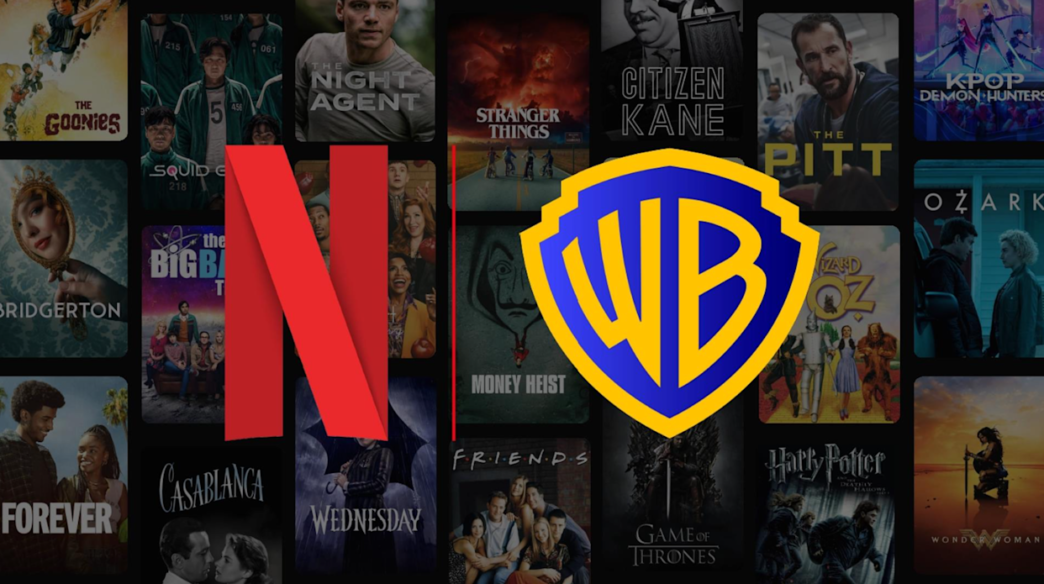
Rather than backing Paramount’s approach, Warner Bros. Discovery reaffirmed its support for its previously announced agreement with Netflix. That transaction, valued at approximately $82.7 billion, focuses on Warner Bros. Discovery’s film and television studio assets and uses what the company described as a more conventional structure combining cash and equity. According to the board, this approach offers greater certainty, lower financial strain, and stronger long-term alignment.
The latest Warner Bros. Discovery rejection follows months of escalating maneuvers. Paramount had been widely rumored as a potential buyer before the Netflix agreement became public. After Warner Bros. Discovery moved forward with Netflix, Paramount bypassed the board and took its case directly to shareholders with an all-cash offer priced at $30 per share in early December.
Warner Bros. Discovery responded swiftly at the time, calling the proposal illusory and arguing that Paramount lacked the financial capacity to support such a massive purchase. The company again encouraged shareholders to support the Netflix transaction, citing funding clarity and balance sheet strength.
Paramount did not back down. The company returned with a revised offer backed by a $40 billion guarantee from its chief executive’s father, Oracle co-founder Larry Ellison. Paramount also said it planned to raise an additional $54 billion in debt to complete the acquisition, positioning the move as a bold bet on scale and content dominance.
Despite these assurances, Warner Bros. Discovery remained unconvinced. In its latest statement, the company highlighted what it described as a severe mismatch between Paramount’s size and the financing required. Paramount currently carries a market capitalization of about $14 billion, yet the proposed acquisition would demand nearly $95 billion in combined debt and equity financing, close to seven times its market value.
Warner Bros. Discovery argued that such an aggressive structure materially increases risk for its shareholders. The company contrasted this with what it sees as the Netflix merger’s more stable and traditional framework, which it believes better protects value and reduces uncertainty.
Credit quality emerged as a central concern in the Warner Bros. Discovery rejection. The company warned that taking on massive additional debt would likely worsen Paramount’s already strained credit profile. Paramount’s bonds currently sit in junk territory, and Warner Bros. Discovery expressed doubt that the company could absorb new liabilities without damaging its financial flexibility.
Free cash flow was another major sticking point. Warner Bros. Discovery pointed to Paramount’s negative free cash flow, arguing that an acquisition of this scale would intensify existing financial pressures. Executives suggested that servicing tens of billions in new debt could limit investment in content, technology, and growth initiatives at a time when competition is intensifying.
By comparison, Warner Bros. Discovery highlighted Netflix’s financial position as a key advantage. Netflix boasts a market capitalization near $400 billion, an investment-grade balance sheet, and strong credit ratings. The streaming giant is also expected to generate more than $12 billion in free cash flow in 2026, providing ample capacity to support integration and future expansion.
Netflix welcomed the board’s decision and reiterated its enthusiasm for the merger. The company said the combination would unite complementary strengths and a shared commitment to storytelling, signaling confidence that the partnership would unlock creative and financial value.
The Warner Bros. Discovery rejection underscores a broader shift in how media companies evaluate consolidation. Scale alone is no longer enough to justify a deal. Boards are increasingly focused on balance sheet health, execution certainty, and long-term resilience in a rapidly changing market.
For Paramount, the setback raises questions about its strategic options. While the company has signaled ambition and willingness to pursue transformative acquisitions, the rejection highlights the limits imposed by leverage and market perception. Investors will now scrutinize whether Paramount recalibrates its approach or explores alternative paths to growth.
For Warner Bros. Discovery, the decision reinforces its effort to position itself alongside financially stronger partners. The company appears intent on avoiding transactions that could burden its operations with excessive debt or distract management during a critical period for the industry.
As the streaming wars continue and legacy studios adapt to new economics, the Warner Bros. Discovery rejection may serve as a cautionary tale. In today’s media landscape, the structure of a deal can matter as much as its price, and financial discipline can outweigh bold promises.
Whether Paramount returns with another revised offer or shifts its focus elsewhere remains to be seen. For now, Warner Bros. Discovery has drawn a clear line, signaling that certainty, stability, and sustainable growth will guide its next chapter rather than headline-grabbing leverage.