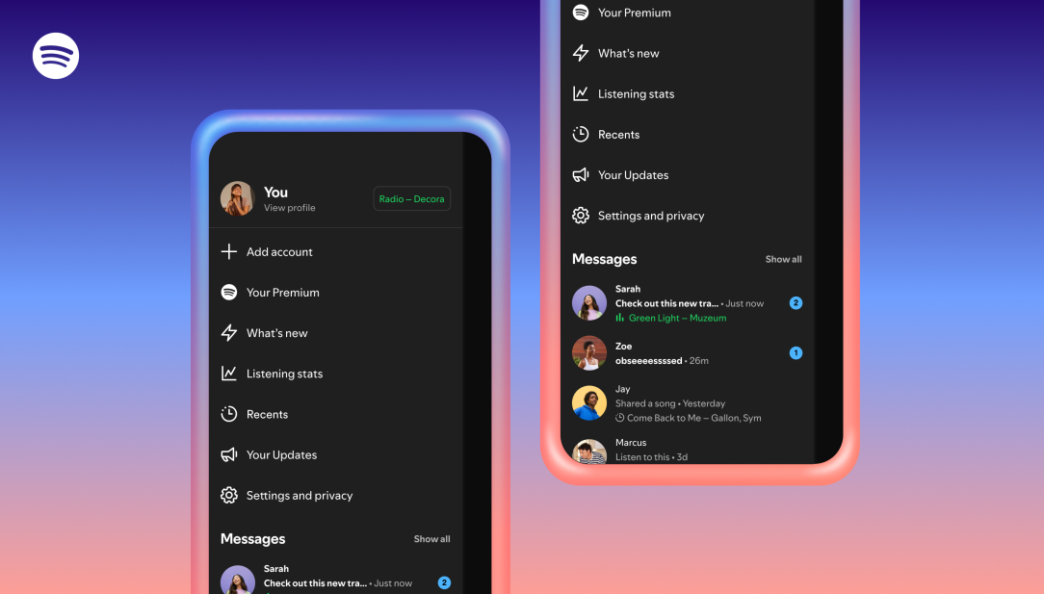
Spotify real time listening sharing marks a major shift in how users connect through music, and the platform is clearly doubling down on social engagement to keep listeners active inside the app. The new update allows users to share exactly what they are streaming in real time with friends, removing the need to jump to external messaging apps just to talk about music. This move strengthens Spotify’s push to become not only a streaming service but also a social destination for music discovery and shared experiences.
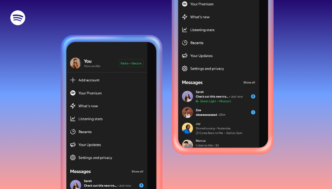
The core of this update centers on Spotify Messages, a feature first introduced in August 2025. With this expansion, Spotify real time listening sharing becomes visible directly inside message chats. Once users enable the listening activity option in their Privacy and Social settings, their current track appears at the top of conversations. Friends can instantly see what is playing, creating a live connection that feels personal and immediate.
Spotify real time listening sharing is designed to be simple and interactive. When a friend’s listening activity appears in Messages, users can tap it to play the song instantly. They can also save the track, open additional options, or react with an emoji. This encourages quick engagement and keeps conversations flowing around music instead of links. The experience feels closer to sitting next to someone and hearing what they are playing.
Another major part of the update is the deeper integration of Jams. Spotify real time listening sharing now connects seamlessly with Jam requests, making collaborative listening easier than ever. Premium users can start a Jam by tapping the Jam option in the top-right corner of a Messages chat. This sends a request to a friend, inviting them to listen together in real time.
Once a Jam request is accepted, the shared session becomes interactive. The user who accepts the request becomes the Jam host, while both participants can add tracks to a shared queue. Spotify real time listening sharing ensures both users hear the same music at the same time, creating a synchronized experience that feels social without being intrusive.
Free users are not left out of the experience. While only Premium users can initiate a Jam, free listeners can join a Jam when invited. This approach encourages wider participation while still giving Premium subscribers exclusive control features. Spotify real time listening sharing therefore works as both a retention tool and a subtle upsell strategy.
Spotify has confirmed that these new features will roll out on both iOS and Android devices. Availability depends on regions where Spotify Messages already exists, with a broader rollout expected by early February. Spotify real time listening sharing is accessible to all users who have access to Messages, as long as listening activity is enabled.
Age restrictions also apply to this feature. Because Spotify real time listening sharing is tied to Messages, it is only available to users aged 16 and older. This aligns with Spotify’s broader safety and privacy policies around social interaction inside the app.
The decision to expand Spotify Messages reflects a larger trend within the streaming industry. For years, users have shared Spotify links through WhatsApp, Instagram, and other platforms. Spotify real time listening sharing aims to pull those conversations back into the app. By keeping interactions internal, Spotify can increase session time and strengthen user retention.
Spotify has been clear about its intention to become more social. The launch of Messages in 2025 was an early signal, and this update builds on that foundation. Spotify real time listening sharing transforms passive listening into an interactive experience, where music becomes a shared moment rather than a solo activity.
Privacy remains an important part of the conversation. Spotify notes that Messages are encrypted at rest and in transit, which helps protect user data during communication. However, Spotify real time listening sharing does not include end-to-end encryption. This means Spotify can still access message content if required, a detail users should understand before fully embracing the feature.
Another limitation is how Messages currently work. Spotify Messages only support one-on-one conversations at the moment. Users can also only chat with people they have previously interacted with, such as playlist collaborators, Jam participants, or Blend partners. While this may feel restrictive, it also reduces spam and keeps interactions relevant.
Spotify real time listening sharing fits neatly into Spotify’s broader product strategy. The platform has consistently experimented with social features like Blends, collaborative playlists, and shared queues. This update brings those ideas together in a more unified and visible way inside Messages.
From a business perspective, Spotify real time listening sharing supports key growth metrics. When users stay inside the app to chat, react, and listen together, Spotify benefits from longer engagement sessions. This can lead to higher ad impressions for free users and stronger justification for Premium subscriptions.
The emotional side of music sharing also plays a role. Music is deeply personal, and Spotify real time listening sharing allows friends to connect through mood, taste, and discovery without needing to explain themselves. Seeing what a friend is playing in real time can spark conversations, recommendations, and shared memories.
This update may also appeal to younger users who already expect social features to be built directly into apps. Spotify real time listening sharing mirrors behaviors seen on platforms like Discord, where shared listening sessions feel natural. Spotify is adapting to these expectations while staying focused on music-first experiences.
As the rollout continues, Spotify real time listening sharing could evolve further. Group messaging, expanded Jam controls, and deeper reactions are all possible next steps. For now, Spotify has taken a clear step toward making music streaming more interactive and socially connected.
Spotify real time listening sharing is not just a feature update. It represents a strategic move to redefine how people experience music together in a digital space. By blending messaging, live activity, and collaborative listening, Spotify is positioning itself as a platform where music lives, moves, and connects people in real time.