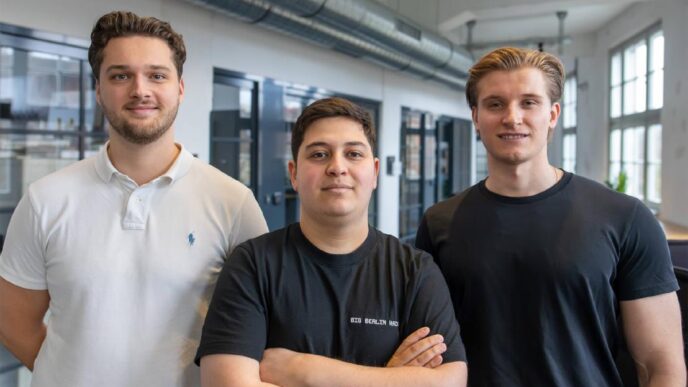

Vibe coding startups are enjoying a wave of attention, but Maor Shlomo, the founder who built Base44 and sold it for roughly $80 million, thinks the excitement hides a serious weakness. He believes vibe coding tools are incredibly easy to copy, and that puts their long-term stability at risk.
Shlomo explained on the latest episode of the “20VC” podcast that creating a vibe coding tool isn’t as complicated as many assume. The part that feels magical to users, the moment when an interface appears after a simple prompt, is actually the easiest piece for any competitor to clone. In his words, every new feature launched by a vibe coding startup can be copied within weeks or months, which makes the entire category vulnerable.
Base44 was born as a bootstrapped project, yet it grew fast and pulled in hundreds of thousands of users. That traction caught the attention of Wix, which acquired the company in June for about $80 million. Three months later, Wix shared in its Q2 results that Base44 was already on track to hit $40 million to $50 million in annual recurring revenue by the end of 2025. Even with that momentum, Shlomo is still cautious about the competitive landscape.
He said the real challenge for vibe coding startups isn’t the user-facing layer. The struggle comes from everything that happens behind the scenes. Clever prompting, light fine-tuning, or stitching together an interface with an existing LLM can create a product that works. But it doesn’t create a moat. Any team with a bit of talent and capital can build something similar.
What takes real time and money, he said, is the infrastructure that supports the tool. That includes a built-in database, authentication systems, user management layers, analytics, and all the critical components that allow people to build apps they’ll actually use. That complexity is what turns a prototype into a real platform.
Shlomo also pointed out that building for real-world use cases means layering dozens of integrations and repeatedly training the agent to survive complicated tasks. Getting there isn’t a matter of one or two prompts. It takes hundreds or even thousands of refined instructions before the system becomes trustworthy enough for daily use.
His warning is arriving at a moment when vibe coding tools are exploding across the tech industry. Startups and investors are pouring money into the space, hoping to capitalize on the shift toward AI-powered software creation. And the spending data suggests they’re right to be excited.
A recent report from a16z shows a clear jump in how startups are adopting vibe coding platforms. The analysis, which looked at transaction data from more than 200,000 Mercury banking customers between June and August, revealed that products like Replit, Cursor, Loveable, and Emergent are among the most-used AI applications today. Replit ranked third overall in total spend, placing it just behind powerhouses like OpenAI and Anthropic.
The authors of the report noted that vibe coding has moved far beyond its early “consumer toy” branding. These tools are now showing up inside workplaces, where teams use them for prototyping, internal tooling, and even production-level builds. That rising adoption is part of the reason investors have doubled down on the category.
Replit announced a massive $250 million round in September at a $3 billion valuation, nearly tripling its worth since 2023. Loveable raised a $200 million Series A in July at a $1.8 billion valuation. Cursor, which has quickly become one of the biggest competitors in the space, revealed a $2.3 billion funding round earlier this month that valued the company at over $29 billion. That level of capital marks one of the largest jumps for any developer-focused AI startup in recent years.
Even with all that funding, the speed at which competitors are spinning up similar features makes things unpredictable. Shlomo believes that founders in the vibe coding market need to stay hyper-focused on the hard parts of the product, the plumbing, the infrastructure, the pieces that aren’t easily copied and that take years to get right. Without that depth, he said, the business eventually becomes another clone in a flood of clones.
His experience at Base44 shaped that view. The company grew because it wasn’t just a surface-level interface on top of an LLM. It included deeper layers that helped people build functional projects that could scale. That is what made it defensible. And that is what, according to Shlomo, separates a real business from a temporary trend.
As vibe coding continues to evolve, the debate now shifts toward what the next generation of these platforms should look like. Will they stay simple, prompt-driven editors, or mature into powerful, multi-layered engineering environments? With billions of dollars now directed at this space, the answer will shape the future of software creation.
For now, the copycat risk is real. The growth is massive. And the companies that survive will likely be the ones building deeper foundations than what users see on the screen.