I kept seeing LingGuang AGI Camera everywhere last week, so I finally gave in and tried China’s newest vibe-coding app. It launched on November 18 and immediately exploded, crossing two million downloads in just a few days. With that kind of momentum, I had to find out what made users flock to it so fast.
LingGuang was created by Ant Group, and the company said the early rush was so intense that one of the app’s most hyped features actually crashed under the pressure. That alone set the tone for what I expected to be a flashy, chaotic, but fascinating test. What I didn’t expect was discovering a feature that felt years ahead of anything I’ve used in ChatGPT.
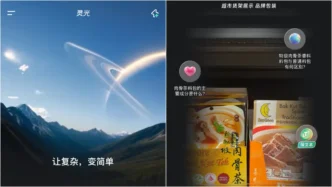
The moment I logged in with my Alipay account, the difference was obvious. Instead of the usual plain interface, LingGuang greeted me with an animated mountain landscape and a sleek Chinese tagline that roughly translates to “Let the complex be simple.” It looked like an app from 2030, not 2024, and that sense of futurism carried through the entire experience.
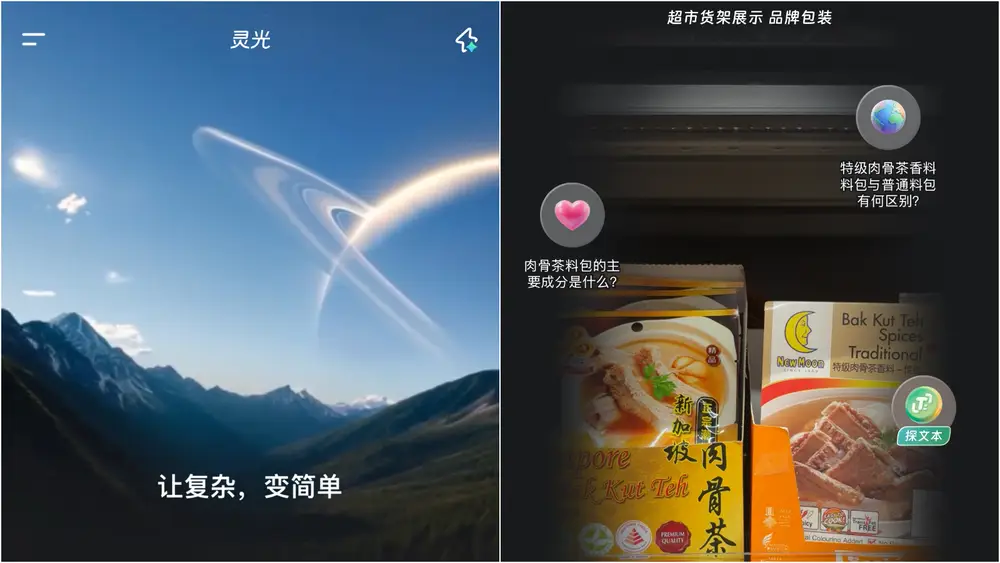
Then I found the feature that everyone’s talking about: the LingGuang AGI camera. It processes scenes in real time, understands what you’re pointing at, and reacts immediately. There’s no need to snap a photo, upload it, and wait for a response. It’s an AI that sees exactly what you see.
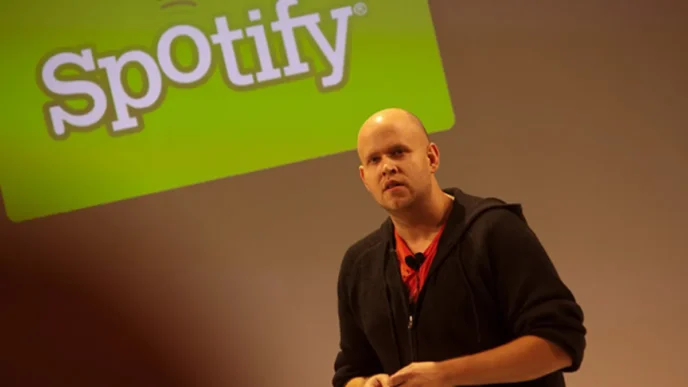
I tested it for the first time at work by pointing my camera at a podcast clip playing on my screen. Instantly, it recognized the founder speaking and identified the company he built. That alone felt surreal. To push it further, I took the AGI camera to my local supermarket.
I had just finished a workout and wanted a protein smoothie, so I aimed my phone at three different bottles on the shelf. LingGuang picked up each brand, read the English labels without a hitch, and surfaced details like protein levels, whether it had sweeteners, the flavor, and even what kind of customer the product suited. It only needed a clear angle to get everything right.
To see if the AI could help with decision-making, I asked it in Chinese which one was worth buying. It looked at the image, pulled data from the web, and compared prices, ingredients, brand backgrounds, and nutrition benefits. Then it gave me three options: best value, most nutritious, and a lactose-free pick. The clarity felt like having a mini-dietitian in my hand.
I tried the same thing with ChatGPT. Because ChatGPT can’t process live scenes, I had to take a photo first and upload it. It analyzed everything correctly, but the whole experience suddenly felt outdated. After the immediacy of LingGuang, the old upload-and-wait flow felt like using a feature from another era.
Even the interface felt smarter. When LingGuang recognizes something, it pops up tappable prompt bubbles above the image to guide you toward the next question. ChatGPT suggests prompts too, but they sit quietly under the chatbox, waiting for you to type something. LingGuang felt like an AR assistant, while ChatGPT still felt like a traditional chat tool.
But LingGuang wasn’t perfect. Nothing from the AGI session saved, which became frustrating fast. If I wanted to revisit results, I had to repeat the scan. ChatGPT saves everything, including uploaded images, so I can scroll back anytime. That’s one area where ChatGPT still wins.
LingGuang also surprised me with something else: video generation built directly into its AGI camera. The process felt ridiculously simple. I snapped a photo of my Labubu figure, typed a short prompt asking the app to make it smile and dance, and waited. Twenty seconds later, the output appeared, a tiny animation with music, synced perfectly to the angle of my hand in the frame.
ChatGPT doesn’t have anything like this in the chat itself. To animate an image, I had to switch over to Sora, upload a picture of Hong Kong’s harbor, and ask it to bring the scene to life. Sora’s result was beautiful but dramatic, full of cinematic energy. LingGuang created a calmer, more natural version of the same scene. The style difference comes down to taste, but LingGuang’s seamless workflow made it feel more like a creative playground.
The most talked-about feature is the one that crashed at launch: the flash app builder. LingGuang claims it can build a mini-app for you in about half a minute. When I tried it, it suggested a “meal decision” generator that worked like a food lottery—a perfect choice for someone who never knows what to eat.
I tapped the idea, and LingGuang started building. It took a little under a minute, then revealed a fully formed mini-app complete with sound effects, dish names, origins, and playful food emojis. It even created a drumroll-style reveal animation. All I did was click one prompt.
The generated suggestions were solid, ramen, curry rice, and other familiar comfort foods. Curious, I asked LingGuang to rebuild it using only Singaporean dishes. One minute later, the entire UI refreshed, and the recommendations switched to Katong laksa, chilli crab, and other local favorites. The specificity was so on point that it felt like the app actually lived here.
Naturally, I asked ChatGPT for something similar. It wrote full code, explained how to use it, and offered customization ideas. But ChatGPT didn’t instantly build a working mini-app. LingGuang gave me a ready-made tool to use immediately; ChatGPT gave me the building blocks.
After spending time with both, the biggest difference became obvious. LingGuang wants to be an all-in-one creativity engine that blends AR, image recognition, video editing, and quick app generation. ChatGPT remains a powerful reasoning companion, more flexible for complex tasks and deeper logic, but not nearly as visually immersive.
LingGuang’s AGI camera is the one feature that genuinely feels light-years ahead. The real-time understanding, instant recommendations, and creative tools all happen in a single flow. It’s not perfect, but it points to where AI interfaces are heading. ChatGPT still wins for depth, knowledge, and accuracy, but LingGuang proves that the next evolution of AI isn’t just about intelligence, it’s about presence.