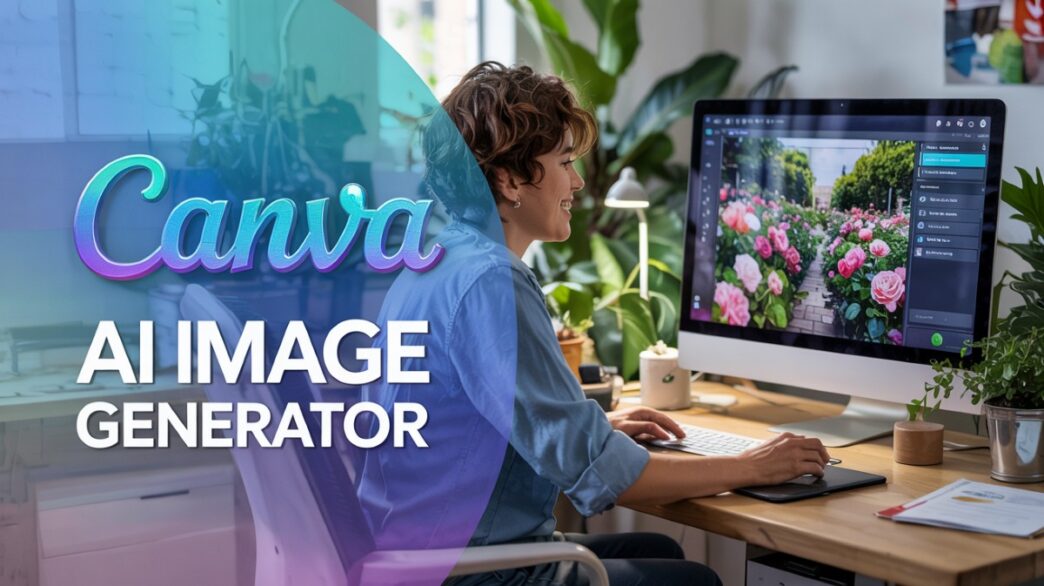
Canva has officially entered the AI race with the launch of its first foundational design model, a move that cements its position as a serious player in creative technology. This model can now understand design layers, layouts, and visual structures, producing editable designs rather than static, flat images.
This upgrade marks a big shift for the Australian design platform. It means users can now create dynamic visuals that can be customized instantly across presentations, websites, whiteboards, and social media posts. Instead of generating a single image, Canva AI delivers layered compositions that can be edited and rearranged effortlessly.
Robert Kawalsky, Canva’s global head of product, explained that most generative models require users to “prompt their way” to a final image. Canva’s approach changes that. The platform lets users begin with a text prompt, such as “modern business pitch deck,” and then refine it visually, adjusting fonts, shapes, and color palettes directly on the canvas. This combination of AI precision and human creativity creates a smoother, faster, and more intuitive design process.
Earlier this year, the company introduced Canva AI Assistant, a chat-style companion that helps users turn text into visuals. Now, this assistant is available everywhere across the platform, inside the design workspace, elements tab, and even in comment threads. Teams working together can tag the bot to generate ideas, text suggestions, or stock media instantly while collaborating in real time.
The assistant itself has also evolved. It can now generate 3D objects, mimic the art style of any uploaded design, and produce creative variations in seconds. With this, Canva AI is becoming a true design partner, capable of understanding visual intent, not just text prompts.
Canva has also expanded beyond visuals into productivity and data visualization. The company launched a spreadsheet tool that connects directly with its app-building feature. This lets users transform raw data into interactive charts, dashboards, and widgets without leaving the platform. A marketer, for instance, can track campaign results and instantly turn those metrics into on-brand visuals.
The new Canva Grow suite takes this further. It’s an AI-powered marketing platform that combines content creation, analytics, and publishing in one place. Teams can design ad creatives, measure engagement, and post directly to platforms like Meta. The suite was made possible through Canva’s acquisition of MagicBrief, a startup known for ad analytics. With this integration, Canva AI is now capable of powering not just design but also performance-driven marketing.
Canva is also rolling out tools to replace popular third-party apps. Users can now build and manage forms directly inside Canva, a sleek alternative to Google Forms — and create branded email templates for newsletters or transactional messages. These new tools make it easier to maintain consistent branding across all customer touchpoints.
In one of its most surprising moves, Canva announced that Affinity, the professional design suite it acquired last year, will now be free forever. The company is redesigning Affinity’s interface to unify vector, pixel, and layout tools into one smooth workspace. Designers can move projects between Affinity and Canva with a single click and even use Canva AI directly within Affinity to generate assets or refine visuals.
This integration brings pro-grade tools to everyone, from students to creative agencies, and sets Canva up to compete directly with Adobe’s ecosystem. By combining Affinity’s depth with Canva’s ease of use, the company is redefining what professional design accessibility looks like.
Together, these updates show Canva’s clear ambition to become an AI-powered creative operating system. The company is building a unified environment where creativity, data, and automation intersect, where designers, marketers, and everyday users can collaborate with AI instead of being replaced by it.
By focusing on editable AI generation, real-time collaboration, and professional integration, Canva AI is changing how people design and communicate visually. With these new tools, creating world-class visuals no longer requires advanced software knowledge, just imagination and a few smart prompts.